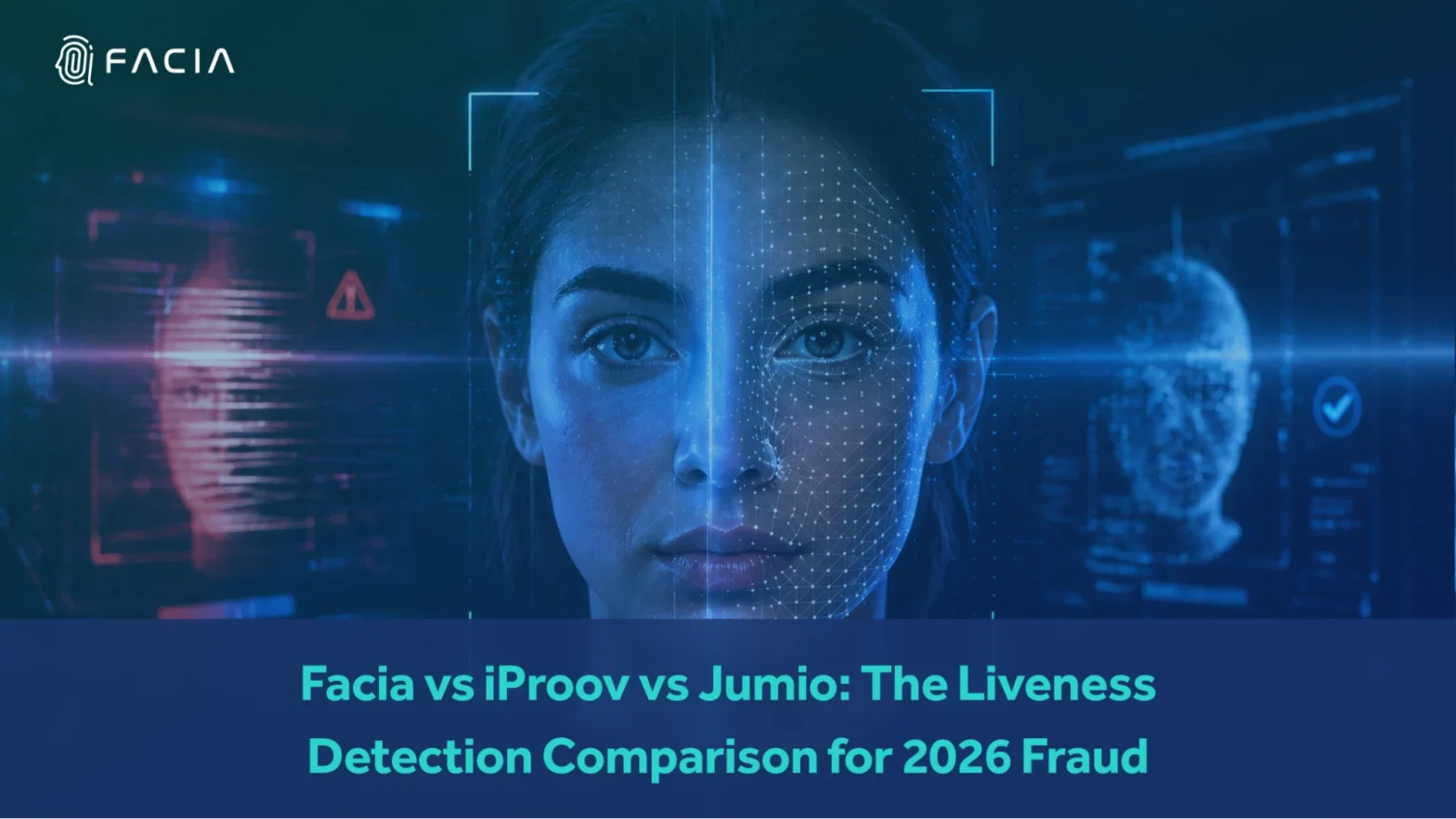
Facia vs iProov vs Jumio: The Liveness Detection Comparison for 2026 Fraud Risks
Author: admin | 30 Apr 2026In This Post
AI-generated identities are now able to pass liveness detection during onboarding by mimicking simple human actions, like blinking and moving their heads. They can even fool basic systems that check for movement. However, a special layer that detects deepfakes recognized the fake media. The key difference was not just whether the face moved, but whether the system could confirm that the face was real.
That is the right frame for evaluating liveness detection in 2026. The FBI’s Internet Crime Report for 2025, published in April 2026, documented almost $21 billion in losses from cyber-enabled crime, including complaints about AI related to fraudulent profiles, voice cloning, identity documents, and video. For onboarding staff, the person they see may not be a real person.
Choosing the top face liveness detection platform is no longer about picking a recognizable brand; it is about finding a system that detects spoofing, resists synthetic media, blocks injection attempts, and fits into identity verification workflows without slowing genuine users.
Why Liveness Detection Needs a Modern Approach
Simple liveness tests were designed for less sophisticated attacks. A blink or a nod could prevent photographic attacks or simple attempts to replay videos. But that is not enough today.
A 2026 UK government study on deep fake detection technologies recognized that the BFSI sector requires deepfake detection to combat advanced fraud, identity theft, voice cloning, and synthetic identity theft. Liveness detection for faces is no longer simply a selfie test; it is whether the system can confirm that the face is real, live, and not a forgery, through a secure facial verification process.
The comparison should not start with brand awareness. It should start with the risk model. A bank, fintech, telecom platform, or marketplace does not need liveness for decoration; it needs a system that stops fake users before they enter the customer base.
Facia vs iProov vs Jumio: Platform Comparison Overview
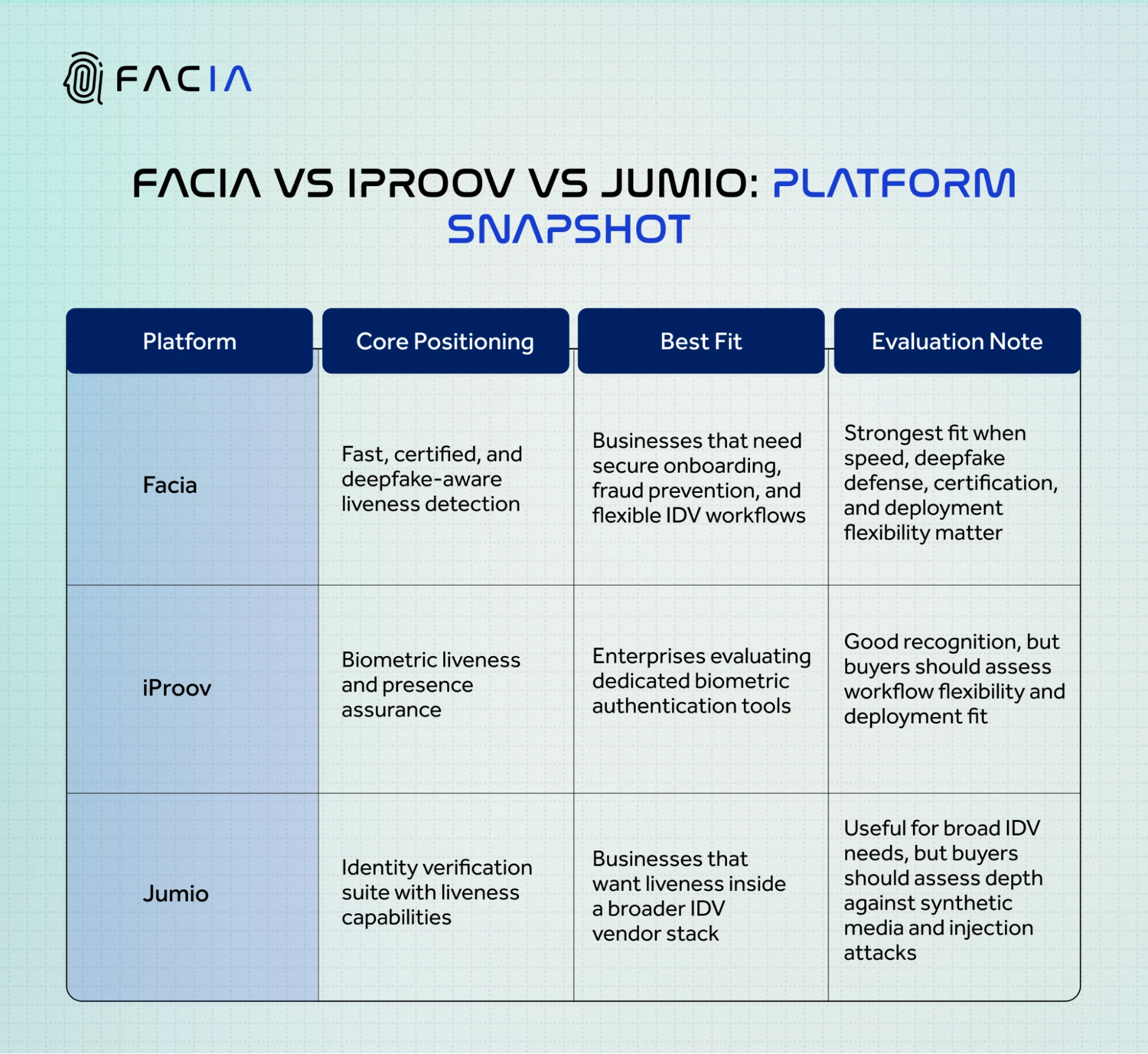
In 2026, evaluating liveness detection solutions is not just about brand recognition and basic biometric matching. They need to assess the platform’s effectiveness against today’s fraud risks, such as deepfakes, synthetic identities, and injection attacks. Facia, iProov, and Jumio address different needs in identity verification processes, but the key difference is their effectiveness in integrating liveness checks with additional layers of fraud prevention, speed, and deployment options. This analysis looks at their suitability for onboarding risks, not just the features.
Key Evaluation Criteria for Liveness Detection Systems
-
Accuracy, FAR/FRR, and Certification
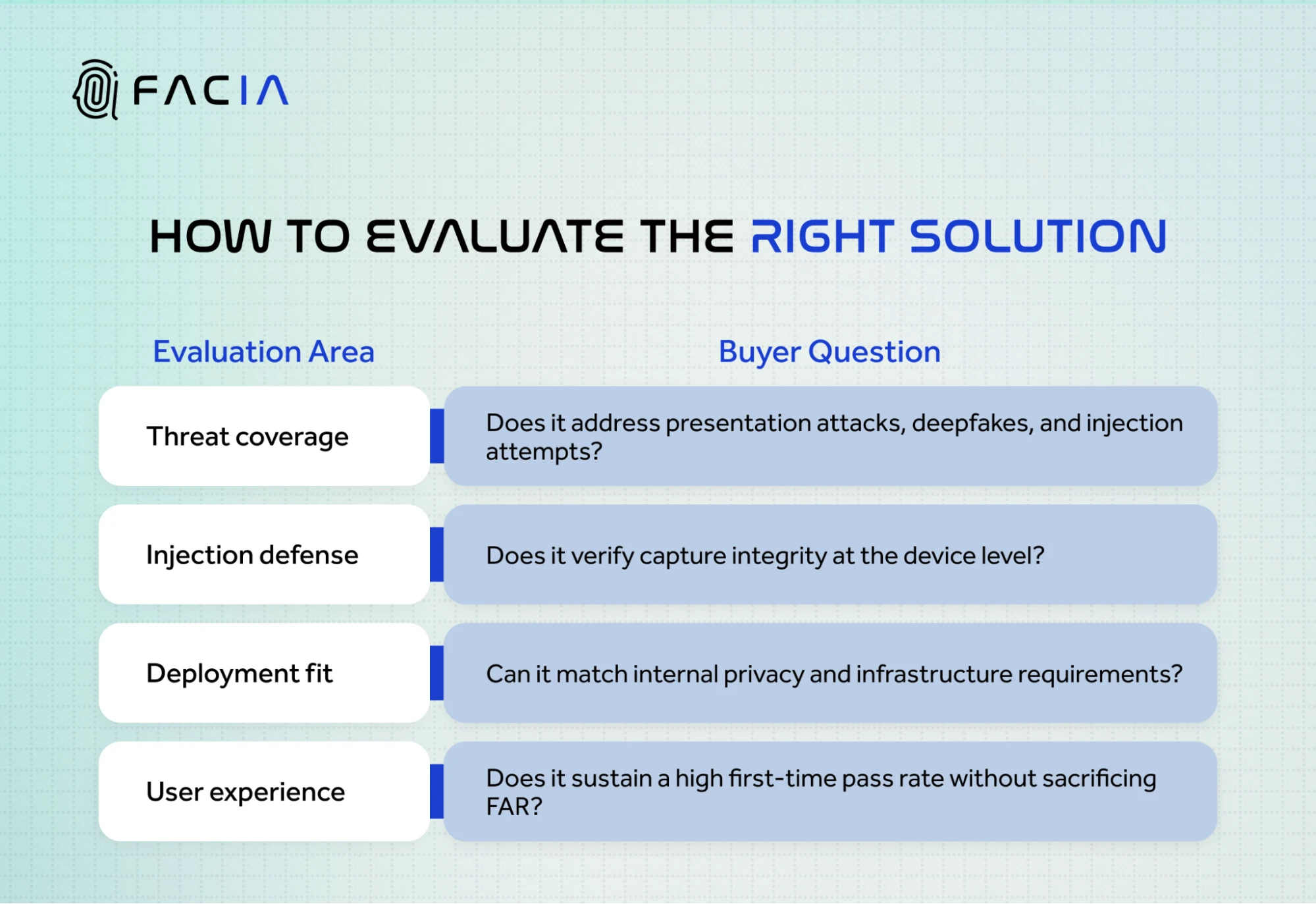
Attacks can be photographs, masks, displays, and video replays. NIST defines presentation attack detection PAD) as the automated decision on whether a sample is a normal biometric presentation or an attack, so PAD is a fundamental component of any liveness detection system.
Facia’s iBeta Level 2 certification shows 0% FAR, meaning no 2D spoof attacks passed, and under 1% FRR, meaning very few real users were rejected.
-
Deepfake Detection Capabilities
Deepfake detection must be part of the liveness debate. An app may detect that a face is live but not that the face is fake.
Facia’s DeepLiveness addresses this gap. The company’s face liveness detection API and SDK offer real-time liveness detection and take less than a second to perform checks. The deepfake detection runs in parallel and detects synthetic faces and other forms of media manipulation that would otherwise go undetected by the liveness check.
-
Protection Against Injection Attacks
The most insidious attack is an injection attack. The fraudster can inject a fake stream on the operating system level or by using a virtual camera application , prior to the liveness system. Facia verifies real camera capture on-device before fake streams can reach server-side liveness checks.
-
Speed, Deployment, and Workflow Integration
Enterprises considering liveness detection solutions can opt for SDKs and APIs to meet internal needs. For liveness detection of face recognition workflows, it’s best to integrate liveness at capture as Facia does with its customer onboarding integration, rather than as a separate process.
How iProov and Jumio Compare
iProov is widely associated with biometric presence assurance and can be relevant for enterprises seeking dedicated biometric authentication. Jumio is commonly considered by businesses wanting liveness as part of a broader IDV suite.
Both are established names. But buyers should apply the same evaluation criteria to each:
Why Facia Leads in Modern Face Liveness Detection
The liveness detection landscape has shifted from simple spoof prevention to multi-layered fraud defense involving deepfakes, injection attacks, and synthetic identity generation.
Within this context, Facia differentiates itself by combining several capabilities in a single pipeline:
- Real-time liveness detection with sub-second response times
- Parallel deepfake detection during verification
- Device-level checks to help mitigate injection-based attacks
- Deployment flexibility across cloud and on-premise environments
While iProov and Jumio are widely adopted in enterprise identity stacks, Facia’s approach focuses more explicitly on combining liveness, deepfake detection, and capture integrity in a unified flow.
The key distinction is not a single feature, but how many layers of modern fraud the system is designed to handle simultaneously.
Which Liveness Detection Platform Fits 2026 Fraud Risks?
The best liveness detection solution depends on the risk, onboarding, and compliance needs of an enterprise.
- iProov might be a good fit for companies prioritizing biometric presence. Jumio may work for teams looking for a liveness solution as part of an identity verification service.
- Facia stands out for businesses that require more than a liveness test. This method enables real-time liveness, deepfake prevention, device capture integrity, and deployment options in a single verification process.
- Facia is a strong option for companies looking to create a more efficient and robust onboarding flow against AI-generated faces, injection attacks, and synthetic identity.
Ready to see how Facia’s liveness detection performs against your fraud environment?
Book a free demo and benchmark it against your real onboarding flow.