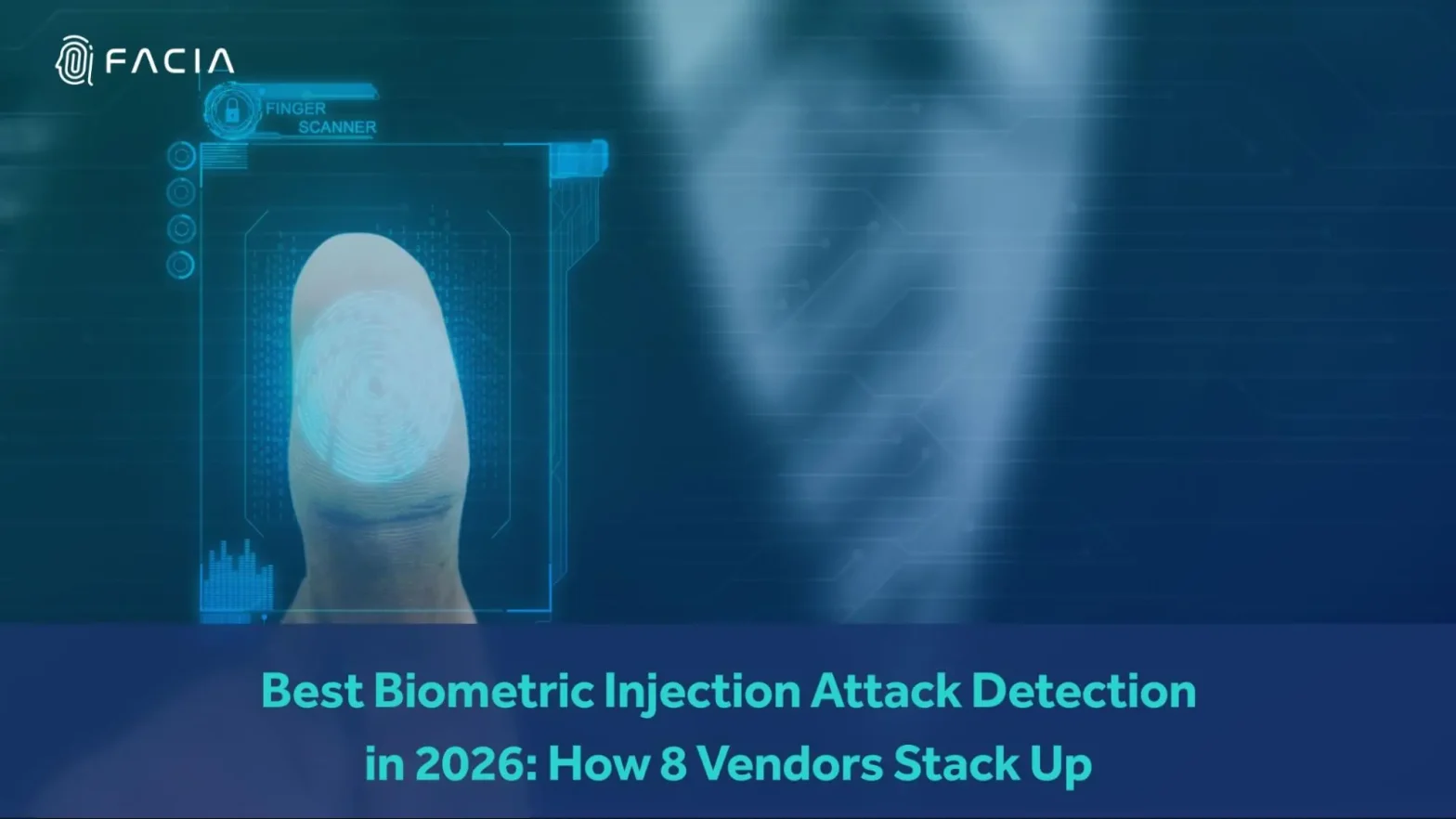
Best Biometric Injection Attack Detection in 2026: How 8 Vendors Stack Up
Author: admin | 07 Aug 2026In This Post
Biometric injection attacks have changed what identity teams need to verify. Matching a face to an identity document is no longer enough. The system must also establish that the media came from a genuine capture session rather than a virtual camera, emulator, altered application, or synthetic feed.
The challenge also affects human reviewers. A peer-reviewed Royal Society study found that typical participants correctly identified synthetic faces only 31% of the time without training. The research examined static-generated faces rather than live biometric attacks, but it shows that visual judgment alone cannot reliably protect onboarding.
Choosing the right defense requires more than comparing face-matching accuracy or liveness claims.
This guide reviews providers across digital injection attack detection, deepfake defense, capture integrity, virtual-camera protection, deployment flexibility, and independent evaluation. It explains how specialist biometric tools differ from broader identity platforms, helping buyers identify the fit for security, compliance, and customer experience.
What Is Biometric Injection Attack Detection?
A presentation attack is the presentation of a false object or image to a true sensor, such as a printed photograph, a screen replay, or a mask. Digital injection attacks take a different route. The media is manipulated before it is sent to the biometric engine for analysis.
A deepfake injection attack combines synthetic media and capture manipulation. The attacker can send an AI-generated or face-swapped video via a virtual camera, an emulator, a modified application, or a compromised device. The engine will then be able to generate convincing media even if there has been no actual capture.
Presentation attacks and digital injection attacks target biometric systems in different ways. This comparison shows why each requires different security controls.
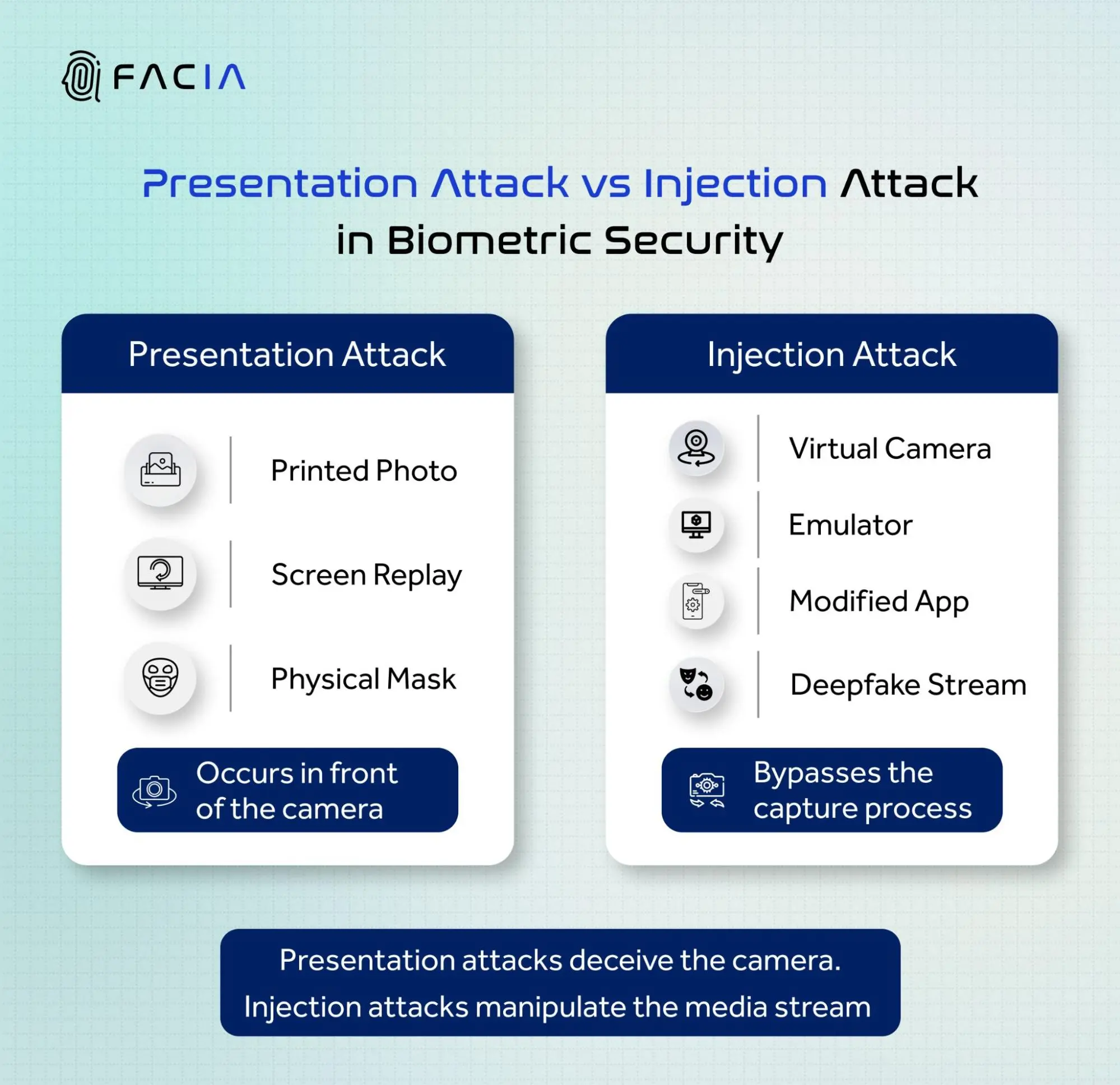
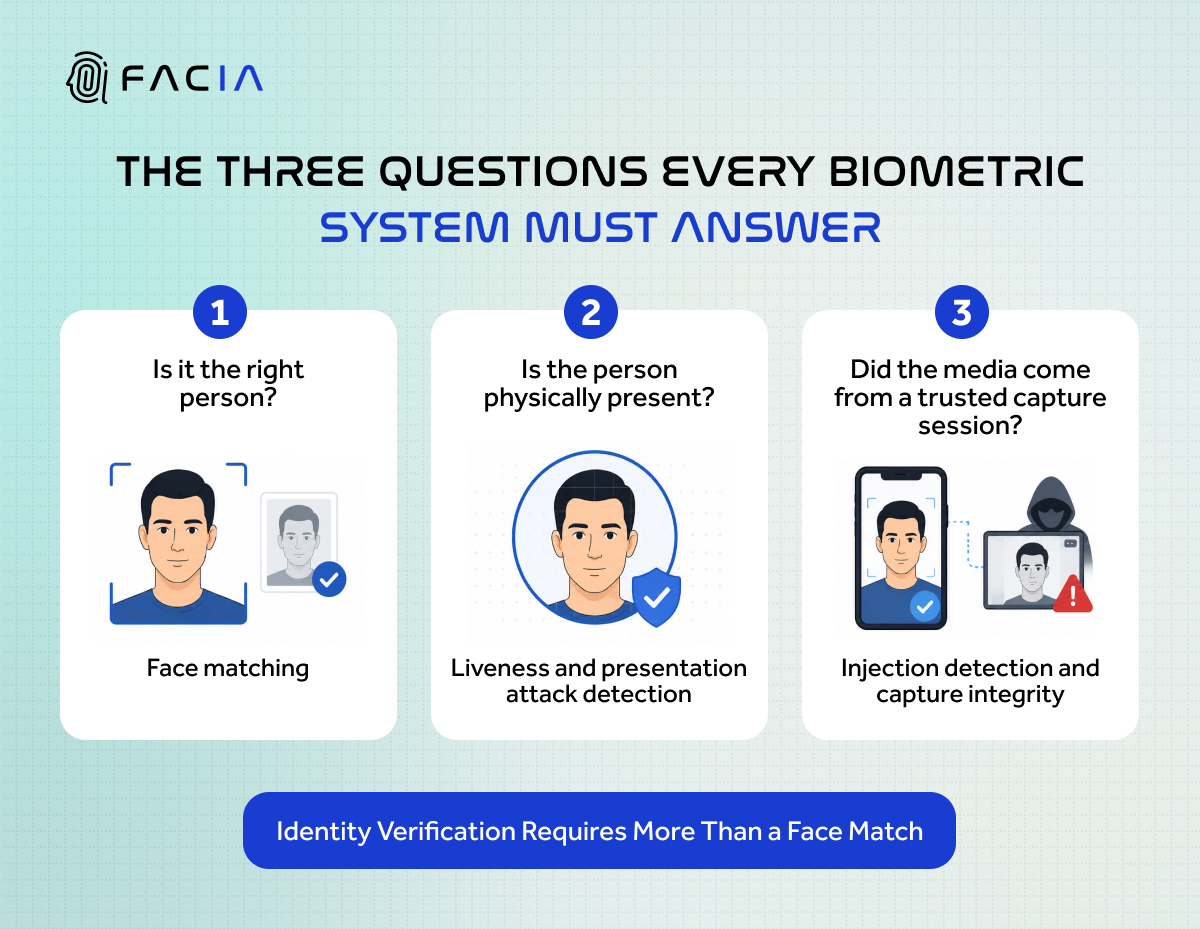
In the NIST Digital Identity Guidelines, video and image injection is a separate identity-proofing threat. They suggest a combination of mitigations: active and passive presentation attack detection, protected communications, and controls to determine whether media originated from a legitimate sensor. Face matching, liveness, and injection detection should thus be evaluated separately, yet in relation to one another.
How We Compared Injection Attack Detection Vendors
The data shown are publicly available as of July 2026. It is a clinical test, not a lab test. Neutral findings are those that are from government or peer-reviewed sources. If not listed in the official vendor documentation, product capability is based on independent testing.
We have evaluated injection coverage, deepfake detection, liveness, capture protection, user friction, and deployment and third-party evaluation. A study commissioned by the UK Government identified 59 deepfake detection providers and said the market is “nascent”. It also revealed a lack of harmonization of metrics and issues of actual reliability. Consumers should inquire regarding what was tested, which devices, and attack methods.
A secure biometric journey must establish more than whether two faces match. It must separately verify identity, liveness, and the integrity of the capture channel, as each control addresses a different attack opportunity.
 Leading Biometric Injection Attack Detection Vendors in 2026
1. Facia: Best for Combined Liveness and Capture Protection
Facia’s DeepLiveness combines active or passive liveness with deepfake analysis. The company also documents a client-side SDK that identifies virtual cameras and modified streams before server-side verification. Facia reports iBeta Level 2 compliance for presentation attack detection, although PAD testing is not equivalent to dedicated injection evaluation. Cloud and on-premises deployment are available.
2. iProov: Best for Independent Injection Attack Evaluation
iProov’s Dynamic Liveness combines controlled lighting and threat monitoring. The company has a CEN/TS 18099 High and an Ingenium Level 4 evaluation by an ISO/IEC 17025-accredited laboratory, and the results were reported in 2026. This means that, in addition to the third-party evidence provided by the manufacturer, the buyer would have specific evidence of injection resilience, which makes iProov relevant in government and other high-assurance environments.
3. FaceTec: Best for Specialist 3D Face Verification
FaceTec generates a 3D FaceMap by analyzing a short selfie video and fusing liveness and matching. It provides documentation about device emulators, virtual cameras, and video-injection adapters. It is suitable for organizations seeking a specialist biometric solution. The buyers are advised to verify the exact SDK, platform, and attack paths to be included in production.
4. Jumio: Best for End-to-End Identity Verification
Jumio Liveness Premium tackles presentation attacks, deepfakes, and camera injection with active illumination and AI analysis. It’s part of a larger platform that includes document verification, facial matching, and fraud decisions. For companies seeking to streamline their onboarding workflows, Jumio could be a suitable solution. If you have existing orchestration, you should consider whether the overall platform provides additional value.
5. Incode: Best for Enterprise Identity Orchestration
Incode Deepsight provides protection against deepfakes and identity-spoofing injections, building on Incode’s platform by leveraging biometric analysis and device and risk signals. It’s ideal for businesses that want to use it as a part of a workflow decision, not as a separate check. According to the documentation, Deepsight is an additional license for Incode.
6. Entrust: Best for Connected Onboarding and Authentication
Entrust’s liveness verification is based on a brief live selfie procedure, which includes presentation attack detection, deepfake detection, and injection prevention. It can be used to detect evidence of tampered or fake webcam footage. For organizations that require onboarding, authentication, and other identity services from a single supplier, they can turn to Entrust.
7. IDnow: Best for European Identity Verification Workflows
IDnow’s biometric verification platform integrates passive liveness and injection detection with automated and assisted journeys. It might be useful for organizations that have to comply in Europe but also serve customers, especially in Europe. According to public information, its controls target synthetic identities, deepfakes, and video injection. The buyer needs to check which protection is used on each product/channel.
8. Regula: Best for Document-Centered Verification
Regula is a face-matching and liveness system based on document authentication technology. According to its release notes, its Face SDK has been improved to provide better mobile protection against injection and deepfakes attacks, including suspicious injections from rooted iOS environments. If document verification is the starting point of the journey, Regula is relevant. The mobile and web implementations should be tested independently.
How to Choose Injection Attack Detection Software
Avoid using the same accuracy measurement to gauge different vendors. Inquire about presentation attacks and digital injections. Verify the devices, operating systems, virtual camera techniques, and deepfake generators covered. The version evaluated should match the version of the SDK being deployed.
Protection can be achieved through device integrity, validation of capture sources, protected transmission, media forensics, and explainable risk signals. Determine whether these controls are part of the product or need to be added separately as a module, license, or integration.
Test real users on representative devices – lighting and accessibility requirements. Check the time to complete the review, the number of retries, the risk of false rejection, and fall-back journeys. If a control that stops fraud drives away legitimate applicants, then it is merely relocating the loss.
Why Facia Is a Strong Choice for Biometric Injection Attack Detection
Biometric injection defense is not solved by face matching alone. Organizations must verify that the person is live, the media is authentic, and the capture channel has not been manipulated. At the same time, these controls must avoid adding unnecessary friction to genuine onboarding journeys.
Facia’s DeepLiveness combines liveness and deepfake analysis into a single biometric layer. Its client-side capture protection identifies virtual cameras and modified streams before server-side verification, while passive and active liveness options allow businesses to adjust the user journey based on risk. Facia also supports both cloud and on-premises deployments, making it suitable for diverse security, infrastructure, and data requirements.
Explore Facia’s biometric injection attack detection capabilities and book a tailored demo to see how DeepLiveness can strengthen your identity verification journey.