
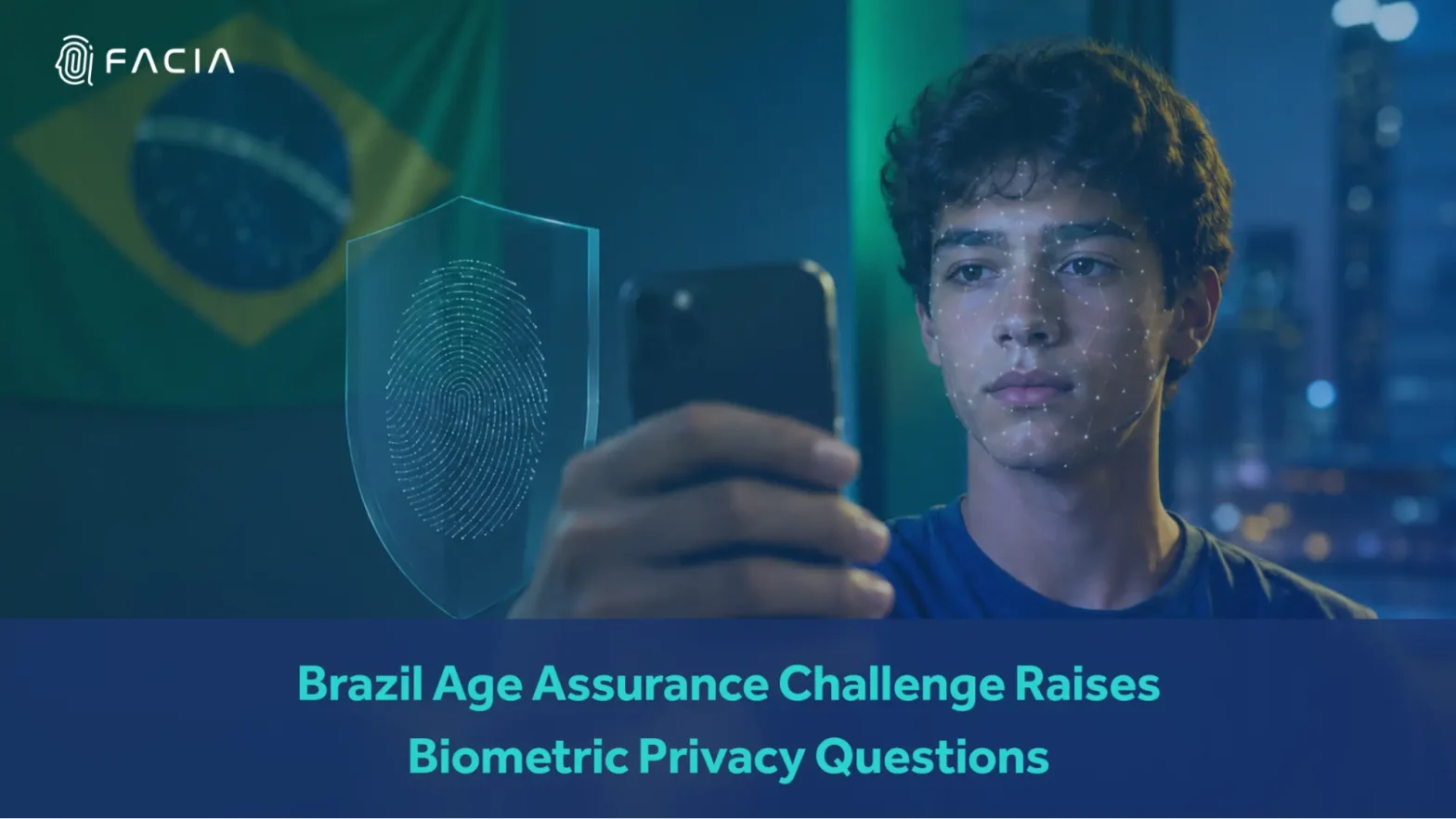
Brazil Age Assurance Challenge Raises Biometric Privacy Questions
Author: admin | 11 Aug 2026
Brazil’s ECA Digital Age Assurance Law is facing its first major constitutional challenge after Partido Missão questioned whether biometric verification requirements place an excessive privacy burden on adult users.
The political party says the demand that individuals must submit facial, fingerprint, voice, or iris patterns to access some online material might be gathering more sensitive information than is needed to safeguard children. The case, No. Direct Action of Unconstitutionality 7,999 could affect the implementation of age controls by platforms across Brazil.
Law 15,211/2025 covers digital services available to Brazilian children, including app stores, operating systems, social media, streaming platforms, messaging applications, marketplaces, and AI tools. Existing age-assurance techniques include biometric verification, government-issued identity documents, and checks against Brazil’s CPF taxpayer database.
But the challenge seems to overlook privacy-preserving alternatives that already exist in the age-assurance market. Facial age estimation could be used to verify whether an individual is a particular age or older, but it wouldn’t be used to identify them or retain identity data; it would merely be used to verify that they’re a certain age or older. Alternatively, Zero-knowledge proofs could be an option for users to claim an age-related attribute without sharing their personal data.
The final guidance from the Brazilian National Data Protection Authority (ANPD) will clarify if cryptographic zero-knowledge proofs can be treated as effective and reliable age checks per the law.
The disagreement raises a larger regulatory question: Does age verification have to be through identity verification, or for a long period of time? Modern providers are increasingly integrating document checks, facial age estimation, biometrics, database verification, and privacy-enhancing credentials.
The impact of this can then be more about what online platforms can do to implement appropriate age-assurance measures rather than what they cannot. This balance might come to the fore as the next stage of enforcement in Brazil is clarified.
Global Age Verification Laws and Privacy Challenges
This debate has also taken place on a worldwide scale. The Online Safety Act was implemented in the UK to strengthen age restrictions on harmful content, and five EU countries launched trials of an age-verification app. Debates around privacy have been escalating, as the Australian government has sought age restrictions for minors, and US states, including Missouri, have enacted age verification for adult sites.