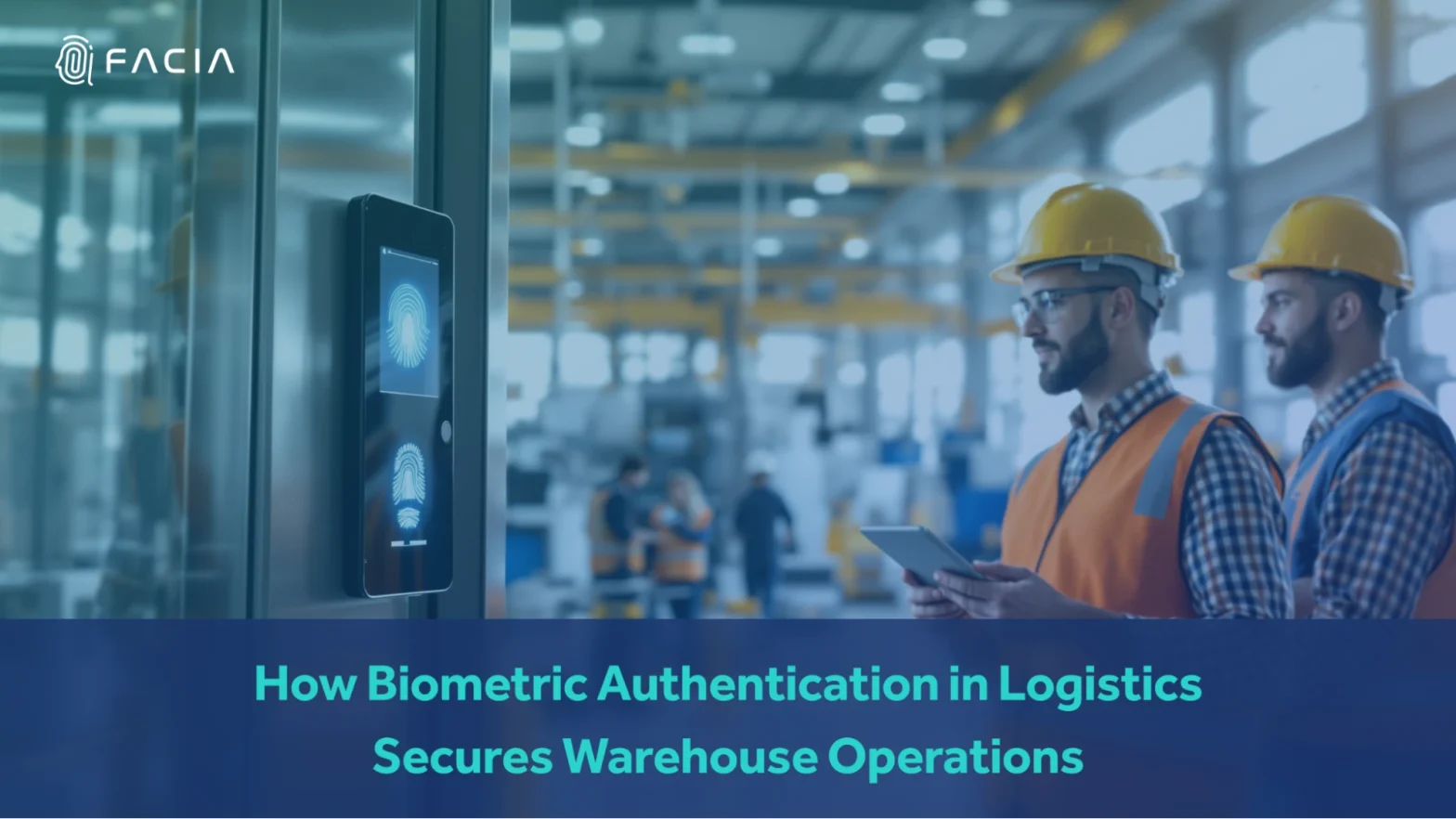
How Biometric Authentication in Logistics Secures Warehouse Operations
Author: admin | 11 May 2026In This Post
A package of high value is leaving the warehouse before dawn on the day. The system indicates someone was in the restricted storage area at 2:14 a.m., authorized the release, and pushed the order towards dispatch. Everything is well on paper. A badge was used. A PIN was entered. The shipment moved.
However, one of the questions that remains is whether it was the right employee?
Expensive goods, team rotations, third-party drivers, contractors, shared devices, warehouse systems, and connected access points are all now managed within the warehouse. If the identity check is weak, the entire operation can be revealed.
CargoNet, the cargo theft prevention and recovery network for North America, estimates that cargo theft losses in the United States and Canada totaled nearly $725 million in 2025, representing a 60% increase over 2024. There were 18% more confirmed thefts, and the average theft value was $273,990.
That is why biometric authentication in the logistics sector is becoming a topic of interest. It moves warehouses from “credentials checking to credentials verifying who is behind each critical action.
What Is Biometric Authentication in Logistics?
Biometric authentication involves using unique physical or behavioral characteristics to confirm identity. This can be done through facial recognition, fingerprint scan, palm recognition, iris scan, or voice verification in warehouses and logistics.
If someone has a badge, then there is a badge that proves it. A password is evidence that someone is knowledgeable about a password. Biometrics are used to verify the identity of the person accessing a facility, device, or restricted area.
NIST’s 2025 digital identity guidance describes biometrics as automated recognition based on biological or behavioral characteristics, including fingerprints, facial features, voice patterns, and keystroke patterns. In logistics, this technology can support entry, attendance, loading dock access, WMS logins, equipment authorization, and shipment release approvals.
Why Traditional Warehouse Security Is No Longer Enough
The traditional methods of warehouse security are simply not sufficient anymore.
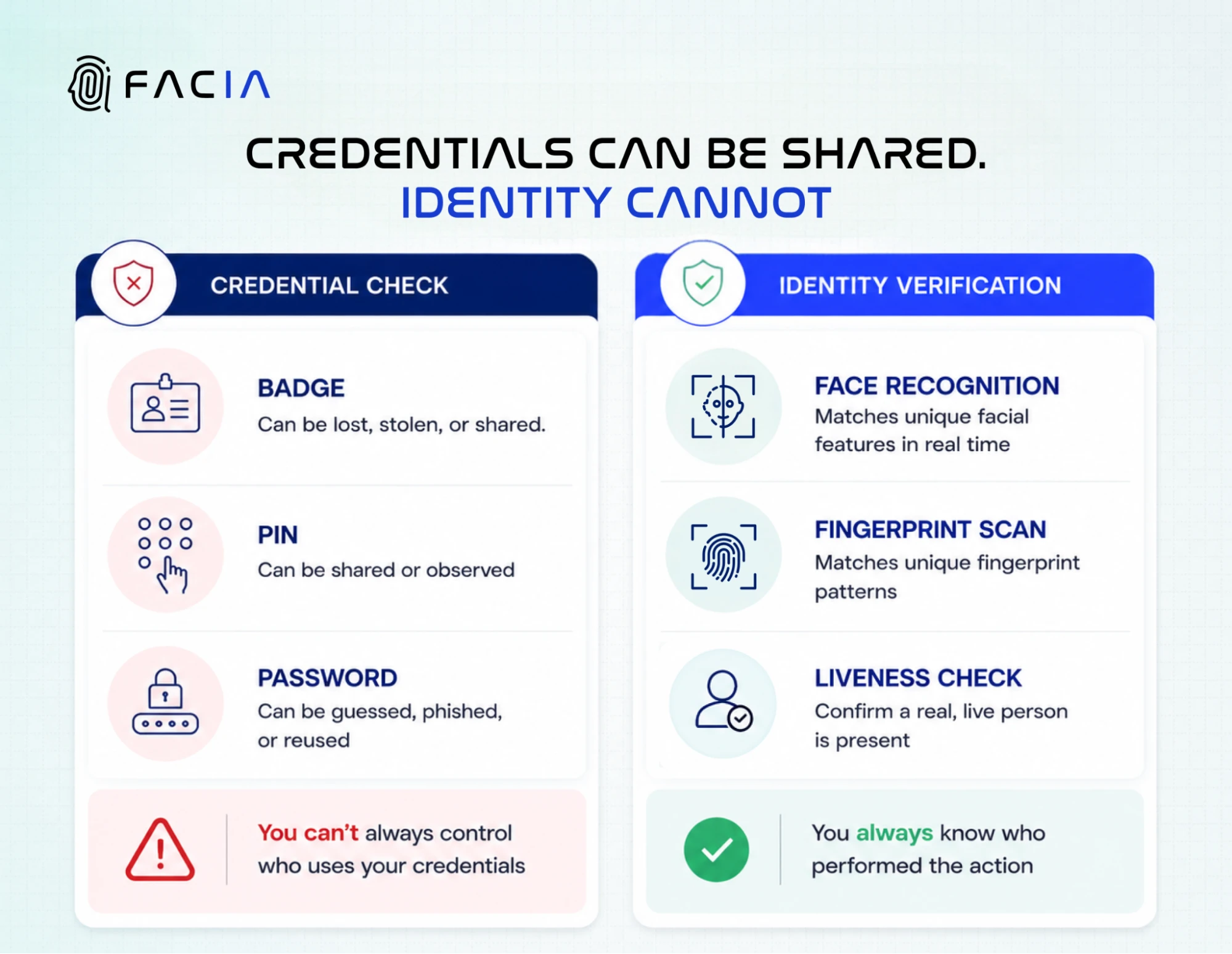
Conventional warehouse security relies on access cards, PINs, passwords, and manual sign-ins. These can assist, yet do not always establish that’s standing at the door or using the terminal.
Badges can be lost. PINs can be shared. It is possible to use the same password twice. Paper visitor logs may not be comprehensive. Of course, the old password written on a piece of sticky note remains as well, typically right by the device it claims to safeguard. This leaves a security hazard as traditional systems verify the credentials, and biometrics verify the person.
The digital aspect is also important. This is where biometric authentication adds an extra layer of certainty by verifying the person behind the action, not just the credential being used.
According to Verizon’s 2025 Data Breach Investigations Report, the third-party involvement was seen in 30% of attacks, which is double the rate from the prior year. Cloud platforms and connected warehouse tools are essential for logistics companies relying on vendors, and their identity security must extend beyond the front gate.
How Warehouse Biometric Systems Secure Daily Operations
The best use for warehouse biometric systems is where identities really matter. It is not the intention to scan all workers at all corners. The aim is to ensure that high-risk actions are not compromised while the rest of the process is not significantly slowed.
-
Securing Restricted Warehouse Zones
There are products in many warehouses that demand a higher level of control, including electronics, pharmaceuticals, luxury goods, cold chain, hazardous materials, and high-value returns.
One unauthorized movement in these areas can cause a big loss, which makes them attractive targets. Use of biometric access can help guarantee that only authorized staff members are allowed to enter these areas. The system does not depend on just a card or pin, but also verifies the presence of the authorized person.
-
Controlling Loading Docks and Entry Gates
One of the most vulnerable parts of the logistics sector is loading docks. Goods come in, go out, and change hands there. It is possible to have multiple parties at the same point.
Biometric Verification can be used to facilitate driver check-in, visitor entry, contractor access, and shipment release approval. This helps to minimize impersonation, false pickups, and unauthorized access to the dock.
-
Protecting Digital Warehouse Access
Door security is not the only part of modern warehouse security. Handheld scanners, inventory terminals, WMS dashboards, dispatch systems, and automation controls are also utilized by workers. In the event that those systems use shared passwords, the accountability is weak.
A pre-stock adjustment biometric will minimize credential misuse, and system activity will be more easily traceable if the system is restricted from access or is not released until a pre-stock adjustment biometric is performed.
Biometric Warehouse Management for Inventory and Chain of Custody
An Inventory and Chain of Custody solution using biometrics for warehouse management. Biometric warehouses for inventory management link the verified identity of an individual to the movement of inventory. It allows a warehouse to be aware of who has received the stock, retrieved it, moved it, packaged it, and accepted it for dispatch.
This is beneficial because inventory control relies on trust. Managers require a more specific system log in case items go missing or the wrong shipment comes out of the facility. They require a straight line of authority.
Biometric records can be used to help with Audit Trails for receiving, storage, picking, packing, returns, and release approvals. They can also be used to identify where a sensitive action has failed, thus minimizing the risk of process errors.
Biometric Workforce Management and Accountability
Biometric workforce management supports logistics companies in managing people for shifts, departments, and access levels. This is helpful when employees are rotating frequently in a warehouse or in the workplace where speed is a part of the job.
-
Preventing Time Fraud and Buddy Punching
Attendance impacts payroll, staffing, productivity, and compliance. If employees log in using common cards or pin numbers, there may be discrepancies in attendance.
Buddy punching occurs when an employee clocks in or out for a different employee, typically with the use of a shared punch card, PIN, or login information. This can lead to inaccurate attendance in busy warehouse shifts and reduce workforce accountability.
Biometric attendance allows for verification of self-clocking in and out of work. This helps to minimize buddy punching and provides more accurate workforce records.
-
Verifying Temporary Workers and Contractors
A large number of warehouses rely on temporary employees, seasonal employees, drivers, vendors, and contractors. In busy times, the facility may be opened to new people weekly. Manual checks can be slow to enter, and weak checks can be a risk.
Biometrics can be used to verify identity and access privileges at the site. A temporary worker might have to use packing areas, but not high-value storage. You don’t need a WMS dashboard; you need a maintenance room.
-
Improving Shift Level Accountability
In incidents, it’s usually a matter of time at the warehouse. Who was on duty at a change of shift? Who went into a closed area? Who gave the transfer approval? Who was the person involved in the shipment prior to dispatch?
Workforce records using biometrics can provide a better answer to those questions. If used correctly, it’s not watching employees every second. It’s about trustworthy responsibility in circumstances involving sensitive activities.
Privacy and Compliance Considerations
Biometric data is sensitive information. A password is set and can be reset; a face or fingerprint is not set and cannot be reset. This is the reason why a warehouse biometric system should be implemented with clarity of policy, security in storage, and a level of employee confidence.
All employees should be aware of the information collected, its purpose, how long it is retained, and who can access it. Businesses should gather data that is essential and not needless employee monitoring.
Encryption, access restrictions, retention policies, audit logs, and compliance audits are all examples of strong controls.
Best Practices for Implementing Biometric Authentication in Logistics
The first step to a successful rollout is having clear priorities. The aim of biometrics must be to enable security and accountability, not to cause a clash for all employees.
- Begin with the high-risk zones like loading docks, inventory cages, cold storage, dispatch approvals, and system access points.
- Ensure biometrics are deployed alongside role-based access to ensure only the areas and systems a user has been verified as having access to are accessible.
- Seamlessly integrate biometrics to WMS, HR, access control, and visitor management and security logs.
- Ensure that biometric information is stored encrypted, access is controlled, and retention procedures are reviewed regularly.
- Provide alternative verification methods if necessary.
- Test the system prior to full deployment.
How Facia Empowers Secure Warehouse Operations
Facia empowers warehouses by strengthening the exact identity gaps that traditional security often leaves open. In logistics, a badge, PIN, or password may show that a credential was used, but it does not always prove that the right person performed the action. This becomes critical when workers enter restricted zones, drivers access loading docks, temporary staff clock in, or teams approve shipment releases.
With face-based biometric authentication and liveness detection, Facia helps warehouses verify that the person behind each sensitive action is genuinely present and authorized. This can reduce risks linked to shared PINs, stolen badges, buddy punching, false pickups, and unauthorized system access.
Instead of adding friction to everyday warehouse movement, Facia supports stronger accountability at high-risk touchpoints. It helps connect important actions to verified identities, giving logistics teams a clearer chain of custody, stronger audit trails, and greater confidence when managing high-value goods, rotating staff, and fast-moving shipments.
Learn how Facia secures warehouse operations with biometric authentication. Book a demo today.
Frequently Asked Questions
Yes. Biometric authentication can integrate with warehouse management systems to verify user identities before granting access to inventory records, shipment approvals, picking workflows, and other operational tasks.
Employees verify their identity using methods like facial recognition or fingerprints when clocking in and out. This creates accurate attendance records while reducing manual errors and unauthorized check-ins.
Yes. Biometrics help prevent issues like buddy punching, shared credentials, and unauthorized system access by linking actions and attendance records to verified individuals.