What is IEEE 2089? How AI Enables Safer Age Verification
Author: Carter H | 01 Oct 2026In This Post
What is IEEE 2089? How AI Enables Safer Age Verification
Children use the internet to learn, play, communicate, and access education. However, as online platforms expand, technology companies have a crucial obligation to safeguard younger users from inappropriate content, unsafe interactions, and risks to personal identity.
As digital threats grow more complex, the need to improve age assurance has become even greater. The UNICEF research, which covered 21 countries, revealed that in just one year, some 20 million children were victims of online sexual exploitation or abuse.
Traditional age checks, such as date-of-birth verification, are no longer enough. These methods rely on user-provided information that can be inaccurate or easily bypassed. With the rise of AI-generated content, deepfakes, and identity manipulation, organizations need reliable age assurance solutions that can verify users while maintaining a seamless experience.
For organisations exploring what the IEEE 2089 framework is and why it matters, the standard provides guidance for building safer digital services through responsible age assurance, privacy protection, and child-focused safety practices.
AI-powered technologies such as facial age estimation, liveness detection, and deepfake prevention help businesses build more secure and reliable age verification systems.
What is the IEEE 2089 Standard?
The IEEE 2089 standard is an international framework designed to help organisations create age-appropriate digital experiences. It provides guidance on how platforms can evaluate risks, implement age-assurance measures, and design online environments that consider children’s safety and rights.
Although IEEE 2089 does not require age confirmation as traditional age gates do, it allows organisations to go beyond that requirement. The framework aims to help organisations understand the risks involved in a service and apply appropriate age assurance techniques that match those risks.
The standard is not intended to limit access. Instead, it helps organisations develop secure online environments where users can engage in responsible service provision in a safe, trusted way, while still offering privacy.
The framework provides guidance on key issues, including when age verification is necessary, how much assurance is needed, and how to ensure the verification process is both safe and user-friendly for businesses.
Why IEEE 2089 Matters in the Age of AI
Digital platforms now face challenges that were not common in earlier years. Fake accounts, synthetic identities, manipulated media, and AI-generated content make it harder to determine whether users are genuine.
Traditional methods of verifying information rely on what users provide. A person can enter a false date of birth, a person’s information, or try to circumvent rules by using manipulated images and videos.
While AI has enhanced several verification processes, it has also sparked new risks. Deepfake technology can generate highly realistic photos and videos, making it difficult to tell the difference between the original and the fake.
This has made it more crucial to have sophisticated age verification solutions that are able to assess real-time signals, verify manipulation and confirm that a genuine person is utilising a platform.
Collecting information is not enough for modern age verification. It requires technology that can interpret identity signals, thwart fraud attempts, and deliver reliable verification results.
Understanding the IEEE 2089 Framework for Children
The IEEE 2089 framework for children focuses on creating digital experiences that recognise the specific safety needs of younger users.
The framework prompts organisations to consider the potential impact on children and the need to put suitable safeguards in place. This includes considering:
- The type of content available on the platform
- How users communicate and interact
- Potential risks linked to online activity
- How personal information is collected and managed
Different platforms may require different levels of protection. A gaming platform, social network, or online community may need stronger age-assurance measures than a general information website.
The framework aims to help organisations protect children’s safety in the design and development of digital services, rather than taking measures only after identifying risks.
Key Principles Behind IEEE 2089 Guidelines
The IEEE 2089 guidelines are based on responsible age assurance practices that balance security, privacy, and user experience.
A key principle of the framework is adopting a risk-based approach. Organisations should understand the risks associated with their platforms and select verification methods that match those risks.
Another key component is privacy. Age assurance systems should not collect unnecessary data and should handle the information collected responsibly.
The other crucial factor is accuracy. A good age verification system should provide assurance while avoiding unwarranted obstacles for those eligible to use it.
Transparency is equally important. Users should understand why age verification is required and how their information is processed.
These principles help establish age assurance systems that safeguard users and maintain trust.
How AI Enables More Effective Age Verification
AI is changing how organisations approach age verification. Instead of relying only on information users enter, AI-powered systems can analyse multiple signals to deliver stronger verification outcomes.
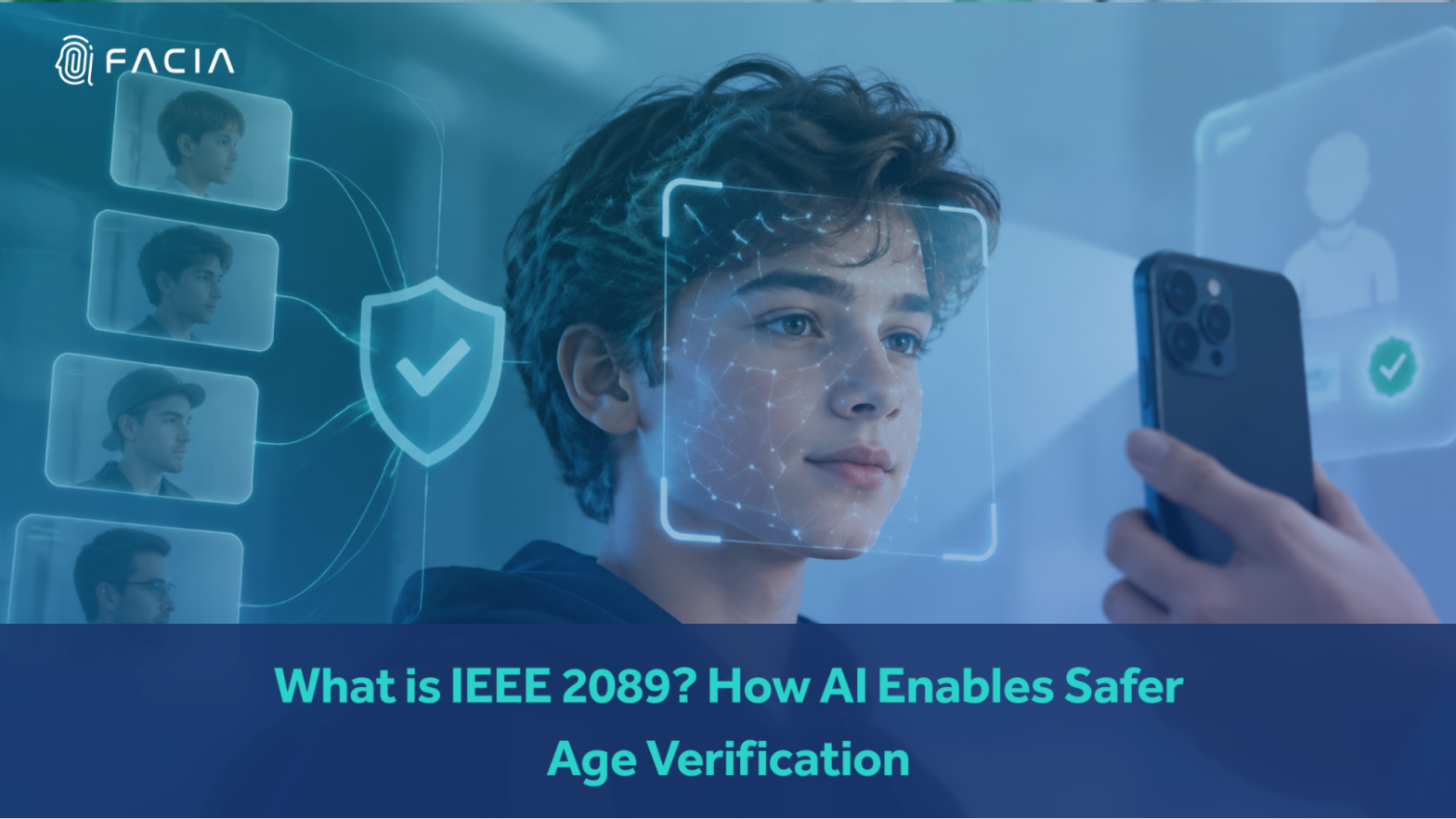
Facial age estimation can determine whether a person is a specific age or falls between two ages, and facial verification can confirm that the person being verified is the same person whose age was estimated.
But for effective age assurance, fraud attempts at an advanced level need to be protected against.. This is where technologies such as liveness detection and deepfake detection become essential.
Liveness detection helps confirm that the user is a real person, not a static image, recorded video, or spoof attempt. Deepfake detection helps identify manipulated facial content created using AI-generated techniques.
Combining these technologies can help create more robust age assurance processes to meet the goals of the IEEE 2089 standard.
IEEE 2089 and Children’s Rights in the Digital World
The IEEE 2089 children’s rights principles highlight the importance of creating digital services that protect children while respecting their privacy and independence.
Access is not the only issue regarding children’s online safety. It’s also about providing spaces where younger users can engage with technology responsibly and safely.
Effective age assurance helps organisations deliver age-appropriate experiences while minimising access to inappropriate content, interactions, and the dissemination of personal information.
A responsible approach involves balance. Verification systems should aim to reassure users they’re protected without adding unnecessary hassle or collecting more information than needed.
By following principles around privacy, transparency, and proportional safeguards, organisations can create digital experiences that better support children’s safety online.
How Facia Helps Organisations Address Age Assurance Challenges
As digital platforms face growing risks from fake identities, deepfakes, and spoofing attempts, businesses need age verification solutions that deliver accurate results without unnecessary friction.
Facia helps organisations build safer digital experiences through AI-powered age assurance and identity verification technology. Its facial age verification capabilities help businesses assess whether users meet age requirements while creating a smooth verification experience.
Facia’s DeepLiveness Detection helps confirm that users are real and present during verification, reducing risks from photos, videos, and spoofing attempts. With Deepfake Detection, organisations can identify AI-generated or manipulated facial content that may be used to bypass verification processes.
Combined with Face Verification, Facia enables businesses to confirm user authenticity and reduce risks linked to fake identities and fraudulent access.
By supporting accurate, secure, and privacy-focused verification workflows, Facia helps organisations align with the goals of the IEEE 2089 guidelines while building safer online environments. Move beyond basic age checks with AI-powered verification built for modern identity risks.
Book a demo today and explore how Facia can strengthen your age assurance strategy.