Are Deepfakes Blurring Reality in the 2026 US Midterm Elections?
Author: admin | 27 Oct 2026In This Post
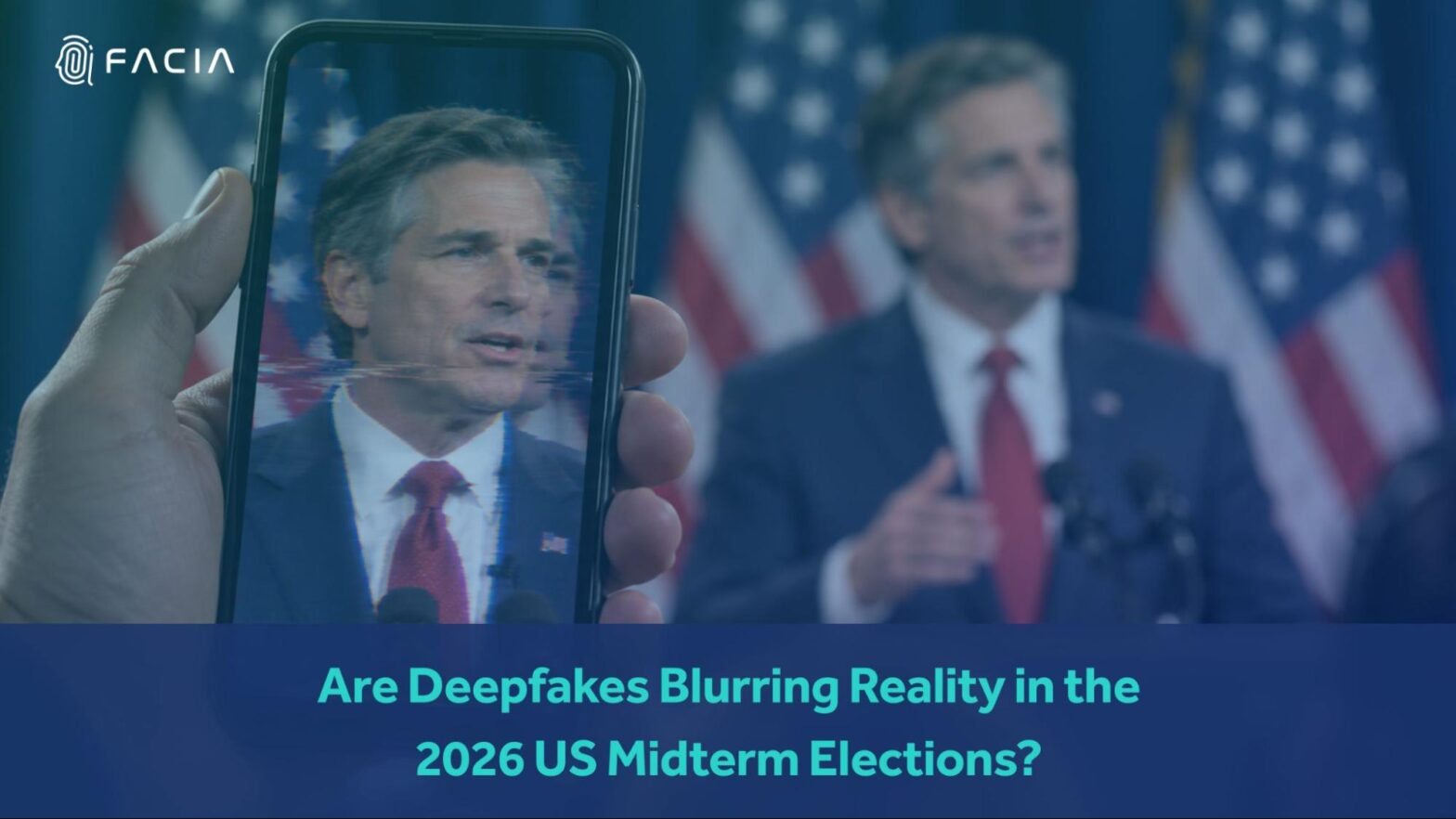
A political candidate appears on screen, making a controversial statement. Their face looks familiar. Their voice sounds convincing. The video spreads across social media before anyone questions whether the moment actually happened.
In the 2026 US midterm elections, this is no longer hypothetical.
In March, Reuters documented an AI-generated advertisement depicting Texas Senate candidate James Talarico speaking in footage he never recorded. The advertisement included an AI disclosure, but its small size made it easy to overlook.
With the November 3 elections approaching, synthetic media is becoming increasingly visible in political communication. AI can recreate faces, clone voices, and generate convincing footage that complicates how audiences establish trust.
For broadcasters, newsrooms and digital platforms, the concern extends beyond misleading political content. Publishing an unverified video can expose organisations to reputational damage, correction costs and declining audience confidence.
When a familiar face can be artificially recreated, how can organisations establish what is genuine?
AI-Generated Political Advertising Is Growing Rapidly
Artificial intelligence has moved from experimental campaign content into mainstream political advertising.
By September 2026, the Wesleyan Media Project had found 164 political ads that had been created or enhanced by AI, and spending was nearly $80 million.
By October 11, the amount of ads had risen to 220 and spending to over $137 million, according to a Wesleyan research update in October.
AI-generated political ads were distributed in 34 different states, highlighting the wide scale of the phenomenon.
But not all ads created by Artificial Intelligence are considered deceptive deepfakes. There are some that include cartoons or even explicit satire. Others make re-enactments of known people in fictional scenarios or create realistic footage.
Disclosure remains another concern. The researchers at Wesleyan discovered that just 27% of the identified advertisements that included AI assistance had an AI disclosure, meaning about 73% did not.
These figures include advertisements that have been identified as being created with the help of AI but don’t strictly refer to deceptive deepfakes. Yet they show that synthetic media is increasingly a big component of political communication.
Recent Deepfake Incidents in the 2026 US Midterms
There are several well-known examples of how synthetic media can impact political messaging and verify content.
AI-Generated Candidate Impersonation in Texas
In March 2026, the National Republican Senatorial Committee released an advertisement featuring an AI-generated version of Texas Senate candidate James Talarico.
The video footage seemed to have him talking to the camera, but he was not recorded on that performance.
How content from the social media was woven into a fabricated presentation was reported by Reuters.
It is a case in point regarding the construction of convincing, but nonexistent, footage with the help of genuine characteristics of identity.
Fabricated Political Footage Across State Campaigns
Reuters also reported on AI-produced ads about Virginia Governor Abigail Spanberger and Georgia Senator Jon Ossoff.
One of them was for a political candidate in Georgia, who had a fake video that showed Osso saying things she had not actually said. AI-generated segments have been used in political advertising campaigns in Virginia with Spanberger.
More recently, Axios reported on October 19 that synthetic political advertisements had appeared across additional state campaigns, including New York and Pennsylvania.
Although some content was intended as satire, manipulated footage can become misleading when reposted without its original disclosures or context.
Synthetic Voice Impersonation and Political Robocalls
The danger of deepfakes isn’t limited to altered videos. An attacker can clone an audio pattern and mimic the voice of a trusted person by using AI voice cloning.
During the 2024 New Hampshire primary, robocalls used an AI-generated voice resembling then-President Joe Biden to discourage election participation.
This incident illustrated the power of synthetic speech to misrepresent communications and to potentially undermine public trust.
What Election Deepfakes Mean for Media Houses and Digital Platforms
The difficulty is not just detecting manipulated content, it’s identifying which content is manipulated and which is not. It’s safeguarding the credibility in a world that can produce convincing images without an actual film.
Reputational Damage and Audience Trust
A newsroom that broadcasts fabricated footage runs the risk of spreading incorrect information using its brand name. Correction can occur in the same clip as the original clip can continue to circulate.
Frequent authenticity breaches could lead to loss of trust among viewers and a decline in the trustworthiness of television networks, publishers, and digital platforms.
Increased Verification Workloads
Pressures on editorial teams to publish breaking news in a timely fashion exist already. Synthetic content will be the subject of further checks such as identifying the source of the content, watching the context of the recording, and checking for possible manipulation.
These processes can lengthen the process of investigations and can put operational strain on the process when multiple outlets are reporting quickly.
Platform Impersonation and Content Manipulation
A similar issue with manipulated videos, impersonation accounts and synthetic identities is a problem for social media. Fake profiles can feature AI-generated faces or fake messages making them seem real.
Platforms with heavy user-generated content should have more stringent verification measures to distinguish true users from coordinated impersonators.
The business takeaway is evident: the issue of content authenticity and the security of its identity is no longer just a technical problem but an operational one.
How Digital Platforms Are Responding to Synthetic Media
Technology companies are introducing policies and detection measures to address AI-generated content.
Meta requires advertisers to disclose certain uses of AI in political and social issue advertisements. It also uses content labeling and provenance technologies to identify some manipulated media.
However, no single detection method can establish authenticity in every situation.
Some videos combine genuine recordings with synthetic elements. Others are generated entirely through artificial intelligence.
Content provenance standards such as C2PA can help establish media origins when trustworthy credentials are available.
For newsrooms and publishers, a stronger approach combines source verification, content credentials, forensic analysis and human editorial review.
Automated detection can support this process, but it should not replace independent verification.
Why Digital Identity Verification Matters
The same technologies used to manipulate political content can threaten identity-dependent digital interactions.
AI-generated faces, manipulated recordings and synthetic camera feeds can be used to impersonate legitimate users during remote onboarding or authentication.
Traditional facial recognition establishes similarity between facial characteristics and a reference identity.
Liveness detection adds another security layer by evaluating whether a genuine person is present during verification.
However, advanced attacks may introduce synthetic faces or manipulated camera streams designed to bypass conventional safeguards.
Organisations must therefore determine not only whether facial characteristics match, but whether the biometric evidence itself is authentic.
This creates a growing need for verification technologies capable of identifying sophisticated synthetic identity attacks.
How Facia Helps Protect Against Deepfake and Identity Threats
The 2026 US midterm elections demonstrate a broader security challenge. AI can now recreate convincing identities across images, videos and digital interactions, making visual recognition alone insufficient.
For media houses, digital platforms and businesses handling sensitive verification processes, establishing authenticity is becoming essential.
Facia addresses these challenges through advanced deepfake detection and biometric identity verification technologies.
Its Deepfake Detection solution is designed to analyze images and videos for signs of AI-generated or manipulated content. These capabilities can support organizations assessing suspicious visual material alongside source verification and editorial review.
For identity-dependent workflows, Facia’s DeepLiveness technology combines facial liveness verification with deepfake detection to identify potentially synthetic biometric submissions.
Facia reports verification processing in under one second, a 0.06% False Acceptance Rate, a 0.3% False Rejection Rate and 0% APCER in its reported iBeta Level 2 testing.
The elections will conclude, but synthetic impersonation will remain a challenge for businesses protecting digital identities and trusted communications.
Protect your platform against evolving deepfake threats. Explore Facia’s deepfake detection solutions and book a demo to discover how advanced identity verification can strengthen your organization’s digital security.