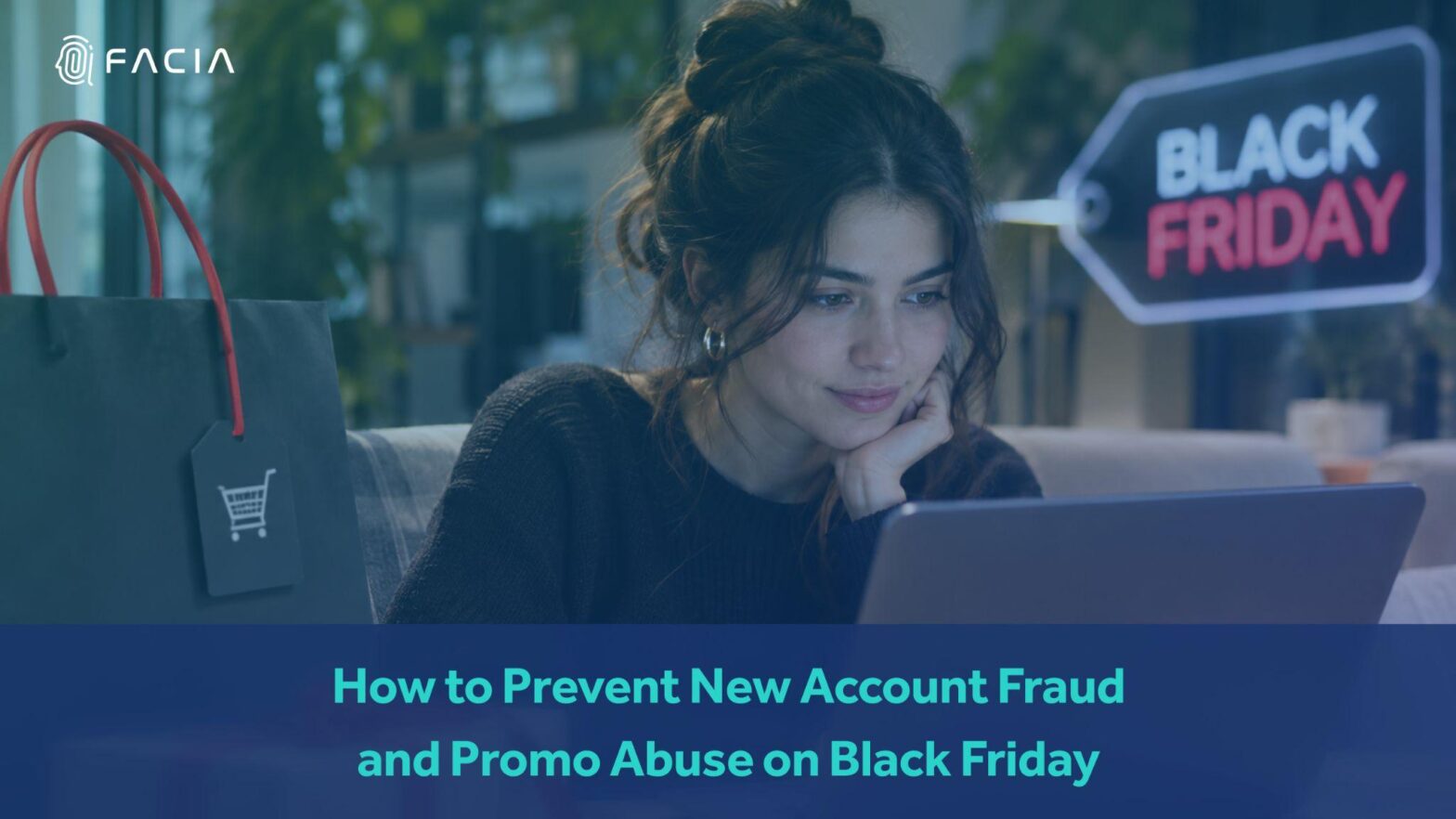
How to Prevent New Account Fraud and Promo Abuse on Black Friday
Author: admin | 10 Nov 2026In This Post
Black Friday discounts are designed to attract new customers, but what happens when the same customer keeps coming back with a different identity?
Black Friday is one of the biggest revenue opportunities for online retailers, bringing a surge in registrations, purchases, and promotional redemptions. According to Adobe Analytics, US consumers spent $11.8 billion online on Black Friday 2025, a 9.1% increase from the previous year.
However, the challenge is identifying who is genuinely new. Fraudsters can use different email addresses, phone numbers, and devices to create accounts that appear unrelated. A 2025 DataDome assessment of 11 major ecommerce websites found that 64% were vulnerable to mass fake account creation, highlighting the risks retailers face during promotional campaigns.
For retailers, the consequences extend beyond lost discounts. Repeated registrations can drain marketing budgets, distort customer acquisition data, and undermine the profitability of seasonal offers.
As Black Friday approaches, effective fraud prevention must begin at registration. Duplicate account detection and face-based deduplication can help identify potential repeat users before promotional rewards are claimed, protecting campaign budgets while maintaining convenient onboarding for genuine customers.
Why Black Friday Creates Opportunities for Fraud
Retailers strive to attract customers on Black Friday by offering welcome discounts, referral bonuses, loyalty programs, and special offers. These incentives attract genuine buyers but can also encourage fraudulent activity.
Fraudsters may create numerous accounts using different email addresses, temporary phone numbers, or fabricated identities. Each account can appear legitimate on its own, allowing the same person to repeatedly access benefits intended for new customers.
The danger isn’t limited to promotional losses. The National Retail Federation’s Retail Fraud 2026 study found that 51% of retailers interviewed experienced growth in loyalty fraud. This reinforces the significance of safeguarding customer accounts and loyalty programmes.
As transaction volumes increase, businesses need controls that distinguish genuine customers from repeated or suspicious registrations.
What Is New Account Fraud?
New account fraud involves opening an account with false, stolen or manipulated identity info to engage in fraudulent activity.
In ecommerce, fraudulent accounts can be utilised for first customer discounts, to abuse referral programmes, access promotional credits or to make unauthorised transactions.
Common techniques include:
- Synthetic identities: Combining fabricated and potentially genuine information to create convincing customer profiles.
- Multiple registrations: Making new accounts to take advantage of special offers over and over again.
- Misusing someone’s identity: Registering using another person’s information.
- Automated sign-ups: Deploying bots to generate accounts and exploit promotional campaigns.
- Manipulated facial images: Using altered photographs or synthetic media to circumvent identity checks.
These reports could remain inactive until a big promotion runs. They can then be activated at once and are hard to detect.
Traditional registers people check tend to be email addresses, phone numbers, and passwords. However, these details can be changed or replaced, allowing repeat offenders to appear as new customers.
How Promo Abuse Affects Retailers During Peak Season
Promotional abuse means taking advantage of a discount, referral program, coupon or loyalty program outside of the terms and conditions set by the company.
While there are some instances where the offer is being used by ordinary customers, there is a possibility of multiple accounts being used by organised fraudsters to systematically make withdrawals from the offer.
1. Multiple Accounts for Welcome Discounts
A fraudster makes multiple customer profiles to cash in a discount that is only available to new customers. These registers contain different contact information, which makes them look distinctly different.
2. Referral Bonus Exploitation
Referral programmes offer incentives for your existing customers to attract new ones. Fraudsters can game these programmes by using fake referred accounts and accumulate incentives without any real customers.
3. Coupon and Loyalty Reward Abuse
Fraudsters can use promotional codes, make use of loopholes in eligibility for rewards or simply respend account rewards several times. Such activities reduce campaign profitability and distort customer acquisition data.
For effective promo abuse prevention, retailers must examine the relationship between accounts rather than relying exclusively on individual transactions.
Why Traditional Fraud Checks Miss Duplicate Accounts
Email verification, phone authentication, IP monitoring, and device fingerprinting can be helpful security indicators. None, however, can make an independent determination of whether a person already has another account.
Fraudsters can sign up on different email addresses, cell phone numbers, browsers, or gadgets.
Shared networks make detection difficult, too. A household connection can be used by multiple legitimate customers and a single fraudulent customer can use many networks.
Blocking accounts just due to the IP address may therefore impact on genuine shoppers.
It’s at this point that duplicate account detection is especially beneficial.
In addition, businesses can use comparisons of identity signals across registrations to determine if there might be potentially connected accounts in advance of sending promotional rewards.
How Face-Based Deduplication Helps Prevent Repeat Registrations
Face-based deduplication is a method to identify a face in a newly enrolled database by comparing it with the biometric database records.
A one to many (1:N) search compares an image of a face to a database of faces that have been registered in the past.
Businesses can find potential duplicate registrations even if the details of the accounts vary.
For instance, a person could register with a couple of e-mail addresses and numbers, but use the identical face when verifying. A deduplication system can identify the potential match for further investigation.
The process typically involves:
- Facial capture: The customer provides a photo of their face in a suitable ID verification process.
- Liveness verification: The system checks whether the capture is of a real person or a spoofing attempt.
- Biometric comparison: Face features are matched to enrolled faces.
- Duplicate identification: Potential matches are flagged based on thresholds that have been set.
- Risk-based review: Businesses decide if more verification or investigation is needed.
Face matching is probabilistic, so a match should not automatically establish fraud. Legitimate repeat registrations, account recovery attempts, and matching errors must also be considered.
Biometric deduplication, if applied correctly, can improve account integrity and help streamline account-opening procedures.
Building an Effective Black Friday Fraud Prevention Strategy
Stopping holiday season fraud goes beyond suspicious payments. Risks must be recognised from account registration to the completion of the customer’s journey to the retailer.
1. Strengthen New Customer Verification
Implement proper identity verification processes when users register for accounts, especially those offering rewards and prizes.
Risk-Based Verification enables businesses to add extra verification steps when there are signs of suspicious activity, not necessarily for all customers.
2. Detect Duplicate Accounts Before Reward Redemption
Connect account registration controls with promotional eligibility checks.
Duplicate account detection can detect duplicate accounts that may have been created by the same customer, when they try to redeem a welcome offer. This will give retailers the opportunity to look into potential abuse before they release incentives.
3. Monitor Unusual Promotional Activity
Monitor for things like frequent coupon use, high numbers of registrations and referrals from linked account numbers.
Behavioural monitoring plus identity verification is more convincing than individual warning signs.
4. Protect the Entire Customer Journey
Fraud prevention should continue beyond registration and checkout.
According to NRF’s 2025 Retail Returns, 9% of all retail returns were fraudulent. Return fraud does not fall under the umbrella of promotional abuse, but it does illustrate the need for safeguards beyond payment authorisation for retailers.
5. Maintain a Frictionless Customer Experience
Over-verifying can turn off real customers when it comes to time-sensitive promotions.
Increase the level of checks where there are increased risks. Ensure that there are clear alternate means for customers unable to biometrically verify, and suspicious matches are subject to proper review.
Prevent Black Friday Promo Abuse with Facia
As Black Friday approaches, preventing fraudulent registrations becomes essential to protecting promotional budgets and maintaining customer trust. Businesses need to identify when the same individual creates multiple accounts to repeatedly claim welcome discounts, referral or rewards offers.
Facia’s Account Deduplication (1:N) solution addresses this challenge by comparing new users’ facial data against existing records to identify potential duplicate accounts, even when different registration details are used. By detecting repeat sign-ups during onboarding, retailers can reduce opportunities for new account fraud and promo abuse while keeping registration convenient for genuine shoppers.
Don’t let duplicate accounts consume your Black Friday promotions. Book a Free Demo with Facia and protect your campaigns before fraud strikes.