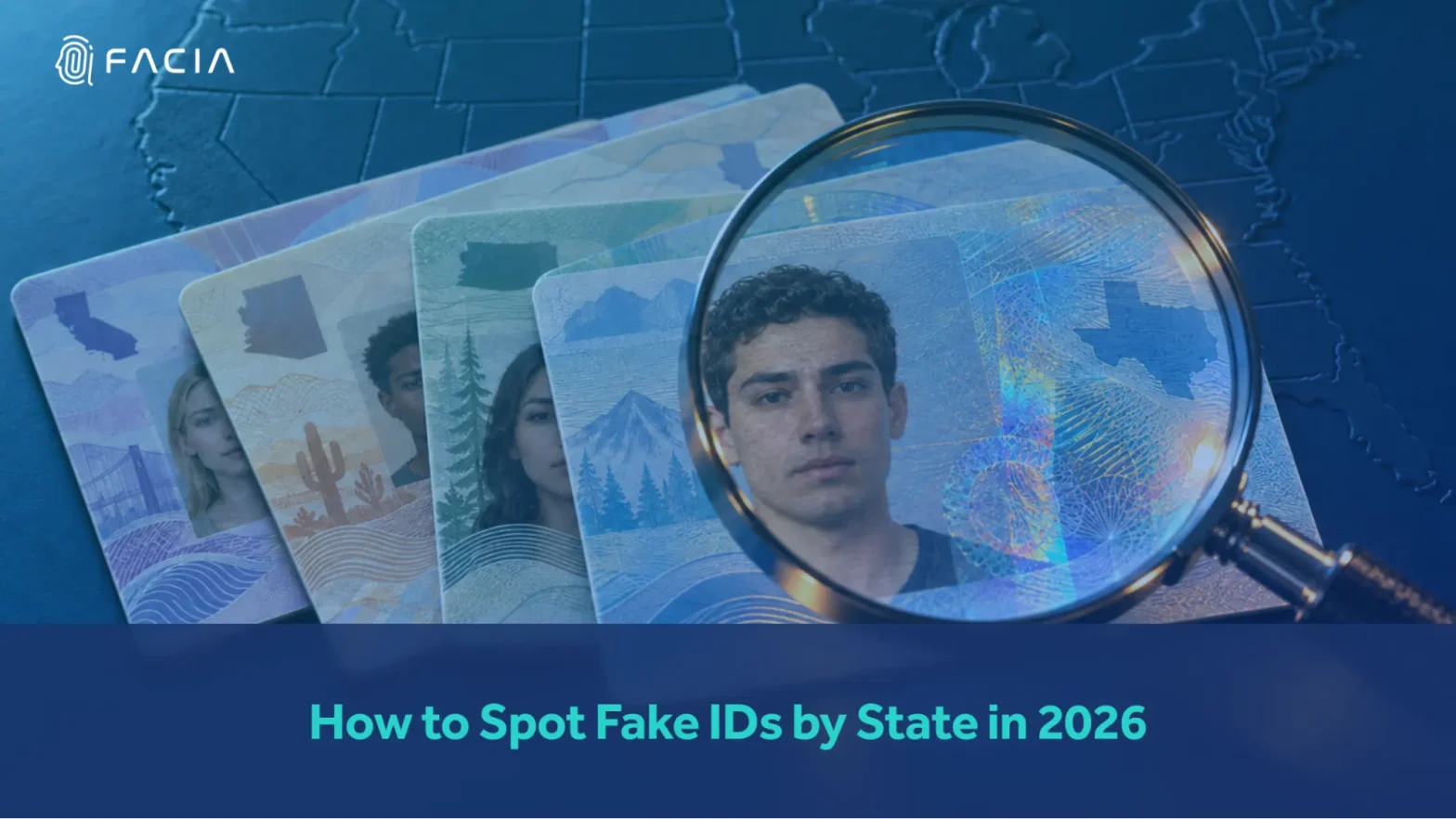
How to Spot Fake IDs by State in 2026
Author: admin | 06 Oct 2026In This Post
Spotting a fake ID can be difficult because every state has its own licence design, layout and document format.
Some fake IDs are fully counterfeit. Others are genuine documents with changed details. Some are real IDs being used by the wrong person. In digital onboarding, fraudsters can also submit edited document images, use face swaps or manipulate video during verification.
In February 2026, the U.S. Department of Justice reported that the OnlyFake platform had produced more than 10,000 digital fake identification documents, including driver’s licences covering all 50 US states, passports and Social Security cards. The DOJ also said the documents were used to bypass identity checks at financial institutions and cryptocurrency exchanges.
For businesses trying to understand how to spot fake IDs by state, checking the card itself is only one part of the process. The document should match the issuing state, the information should be consistent, and the person presenting it should match the identity on the card.
What Is a Fake ID?
A fake ID is a document that has been created, altered or used to misrepresent someone’s identity. It can be a counterfeit driver’s licence, a genuine ID with changed information or a real document being used by someone else.
In online verification, fake ID fraud may also involve edited scans or photographs. A fraudster may replace the portrait, change personal details or submit a manipulated version of a genuine document. This is why businesses need to check both the document and the person using it.
What Are the Most Common Types of Fake IDs?
Several types of fake IDs exist, and each creates a different risk.
-
Counterfeit IDs
A fake ID is an ID that appears to be a genuine government-issued ID. The layout, photos, fonts, colors and other obvious information on the real card may be duplicated by the fraudster. Some of these are readily apparent and others can appear strong on initial visual inspection..
-
Altered IDs
An altered ID starts with a genuine document. Later, information like the date of birth, photo, address, etc., will be modified. The changes may be made to the physical card or to a digital image.
-
Stolen or Borrowed IDs
Sometimes the document itself is genuine. The issue is that it belongs to someone else. A stolen or borrowed ID can be harder to catch because the document may pass basic authenticity checks.
-
Digitally Manipulated IDs
Remote onboarding often involves uploading an image of an ID. Fraudsters can edit that image before it reaches the business. A portrait may be replaced, a date changed, or other personal information altered.
-
Synthetic Identity Documents
Synthetic identities are information that is both real and fictional. Fraudsters can use legitimate personal information, but add false information and make supporting documents.
- AI-Assisted Identity Fraud
A fake or stolen ID can also be paired with a deepfake, face swap or manipulated video feed. That is why the most common types of fake IDs aren’t limited to physical cards.
How to Spot Fake IDs by State
There is no single checklist that works for every US state. Each state issues its own driver’s licences and identification cards, so designs, layouts and document details can vary. When reviewing fake IDs by state, start with the issuing jurisdiction.
Check the Issuing State
Make sure the design matches the state named on the card.
Review the Portrait
Look for signs that the photograph has been replaced, edited or poorly added.
Check Personal Information
Review the name, date of birth, address and other details for inconsistencies.
Review the Formatting
Fonts, spacing, alignment and placement should match the expected format.
Compare Machine Readable Data
Where available, encoded information should match the printed information on the card.
Verify the Holder
The person presenting the ID should match the portrait on the document. For businesses handling customers across several states, expecting staff to recognise every licence variation is difficult. Automated checks and updated document reference data can make this process more consistent.
What Features of Fake IDs Should You Look For?
Fake IDs can appear in the design, the data, or the verification process.
Visual Warning Signs
Common signs include:
- Poor image quality
- Unusual fonts
- Uneven spacing
- Misaligned information
- Inconsistent colours
- Signs of photo replacement
- Layouts that do not match the expected document
One visual issue does not always mean the ID is fake, but it may be enough to trigger further review.
Data Warning Signs
Sometimes the issue is in the information rather than the design. Printed information should match machine-readable or extracted data where available.
A different date of birth, conflicting address or mismatched identity detail may point to document tampering.
Identity Warning Signs
The person using the document also needs to match it.
Possible warning signs include:
- The face does not match the ID photo
- The person appears to be a different age
- The user fails a liveness check
- The face appears digitally manipulated
- The camera feed shows signs of alteration
These checks can help catch fraud even when the document looks genuine.
Why Fake IDs Are Harder to Detect in 2026
Fraudsters now have access to better tools. Editing software can quickly alter document images. Generative AI can create realistic faces. Face swap tools can imitate another person. Video can also be manipulated before reaching a verification system.
Fraudsters may also use stolen genuine IDs instead of creating fake documents. Sometimes the card looks correct, but the person using it is not.
Why Visual ID Checks Are Not Enough
Take a genuine driver’s licence that has been stolen. The design is correct. The name and date of birth are real. The barcode data may also be valid. A document check may find nothing wrong. But the person holding the card may still be an impostor.
A stronger verification process should check whether the document is genuine, whether the information matches, whether the person matches the portrait and whether a real person is present.
It should also look for signs of manipulated facial media or altered video.
A stolen ID may pass document checks but fail face matching. A face swap may look convincing but fail liveness or deepfake checks. An injected video may appear normal but still show signs of tampering.
How Modern Fake ID Detection Works
Modern fake ID detection uses several checks together.
Document Capture
The ID is captured clearly so its information can be reviewed.
Document Analysis
The layout, visible data and document details are checked for anything unusual.
Data Comparison
Information taken from the ID can be compared with details provided during onboarding.
Face Matching
The user is compared with the portrait linked to the claimed identity.
Liveness Detection
Liveness checks help confirm that a real person is present rather than a photo, replay or spoof.
Deepfake Detection
Deepfake detection looks for signs that facial media has been created or manipulated.
Injection Detection
Injection protection helps identify prerecorded or altered media being fed directly into the verification process.
Using these checks together gives businesses a clearer view of the identity attempt.
Fake ID vs Identity Fraud
A fake ID and identity fraud are connected, but they are not the same thing. A fake ID is a counterfeit, altered or fraudulently used identity document.
Identity fraud is broader. It can involve stolen identities, synthetic identities, account takeover, biometric manipulation or genuine documents being used by the wrong person.
A business may catch counterfeit cards and still accept a real ID being used by an impostor. That is why you need to check both the document and the person.
Verify the Person Behind the ID With Facia
Fake ID fraud can involve several weak points at once. The document may be counterfeit. A genuine ID may be stolen. The person presenting it may not match the portrait. A fraudster may also use a face swap, deepfake or injected video to make the identity attempt look real.
Facia helps businesses check the person behind the document. Its Face Verification compares the user with the identity they are claiming. DeepLiveness helps confirm that a real person is present during verification. Deepfake Detection helps identify manipulated facial media, while Injection Protection helps spot altered or prerecorded content being fed into the verification flow.
Together, these checks help businesses review the document, the face and the live interaction as part of one verification process.
See how Facia can strengthen your identity verification process. Book a demo today.