UK Tightens Facial Recognition Rules with Stricter Accuracy Standards
Author: admin | 14 Oct 2026
In This Post
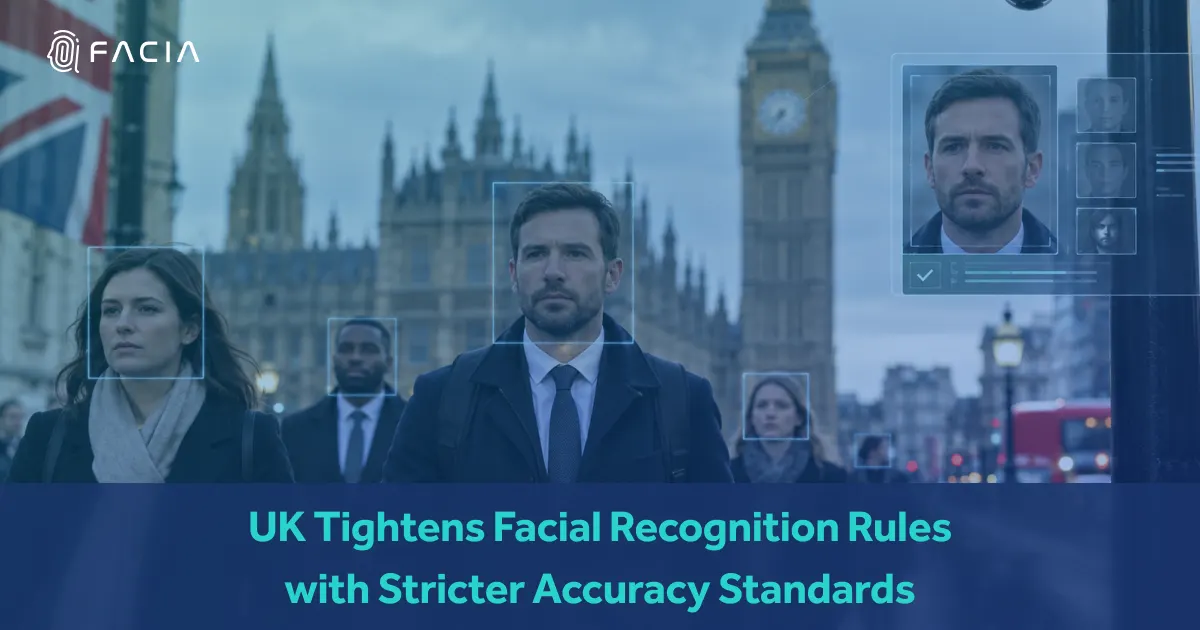
The UK Home Office has updated its live facial recognition rules for immigration enforcement, introducing stricter biometric accuracy standards, watchlist safeguards and human oversight requirements. Published on October 8, 2026, the revised guidance outlines how facial recognition technology can be used to identify individuals during immigration operations.
According to the official UK Home Office policy, live facial recognition (LFR) can be deployed at transport hubs, travel routes and public events beyond traditional border checkpoints. Immigration Enforcement may also conduct joint operations with police forces under established legal safeguards.
The updated policy specifies that operational false alert rates should generally remain at or below 0.1% in most scenarios. Immigration Enforcement will also maintain a facial recognition matching threshold of 0.64 for approved and objectively tested biometric systems.
Under the revised guidelines, facial recognition watchlists must serve defined enforcement objectives and remain proportionate, location-specific and time-limited.
Human oversight remains mandatory. Officers must assess potential biometric matches before taking enforcement action, ensuring automated facial recognition alerts do not independently determine outcomes.
The guidance also requires the automatic and permanent deletion of images that generate no alerts. Authorities must monitor deployments, evaluate biometric accuracy and consider potential demographic differences in system performance.
These developments highlight increasing attention to facial recognition accuracy, biometric data protection and accountability as governments expand the operational use of biometric identification technology.
Global Shift Toward Regulated Facial Recognition
In 2025, the UK trialled live facial recognition at Holyhead Port for immigration enforcement. US immigration authorities have also adopted mobile biometric identification tools. Meanwhile, the European Union’s AI Act restricts certain real-time biometric identification uses in public spaces, reflecting wider regulatory scrutiny of facial recognition technology.