How Facial Recognition Helps Fight Human Trafficking
Author: teresa_myers | 17 May 2024In This Post
Human trafficking remains one of the most complex forms of organised crime, affecting vulnerable individuals across borders and regions. Victims are often moved through hidden networks, separated from support systems, deprived of identification documents, or exploited through increasingly sophisticated methods.
Human trafficking networks are becoming increasingly complex, with criminals using new methods, digital platforms, and cross-border operations to exploit victims. According to the European Commission’s 2025 update on trafficking in human beings, 10,793 victims of trafficking were registered across the European Union in 2023, representing a 6.9% increase compared with 2022. The data highlights the continued challenge of identifying victims and strengthening prevention efforts.
Law enforcement agencies and humanitarian organisations are exploring technologies that can support victim identification, analyse evidence, and connect information across investigations. Facial recognition, when used responsibly, can help provide valuable support in identifying individuals and strengthening investigative efforts.
Understanding Human Trafficking and Identification Challenges
Human trafficking involves the recruitment, transportation, transfer, or exploitation of individuals through force, fraud, or coercion.
One of the most difficult steps in combating trafficking is to identify the victim. Official documents might not be available to many victims, and many victims may be controlled by traffickers or unable to communicate their situation safely.
Investigators often have only incomplete or partial information, such as:
- Images from online platforms
- Missing person records
- Surveillance footage
- Digital evidence
- Cross-border investigation data
Criminal networks often operate across multiple regions, and traditional investigation techniques can be time-consuming and costly.
The ability to quickly gain insight into the information on hand and make connections can help investigators respond faster and support victims. Biometric technologies can help.
How Facial Recognition Technology Supports Human Trafficking Investigations
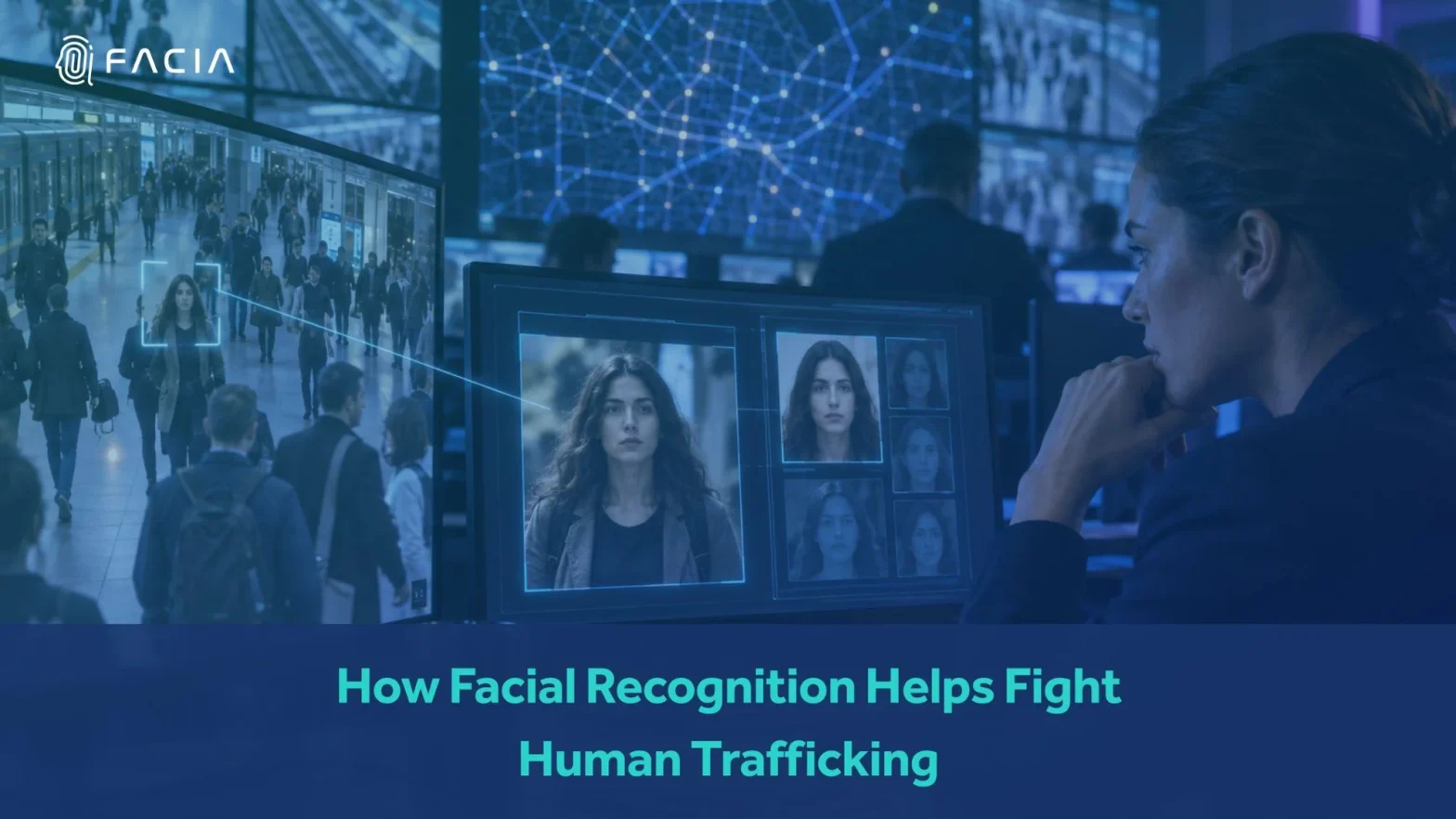
Facial recognition technology analyses facial attributes to help determine whether images or videos show the same person.
This technology can help authorities in human trafficking investigations to organise visual information, find potential matches and link evidence from various sources.
Identifying Unknown Victims
Facial recognition is one of the most significant uses of the technology and can help identify people who are not known to anyone.
Investigators may find images or videos where a person’s identity cannot be confirmed immediately. Facial recognition systems can compare facial information against authorised databases and help generate potential leads for further investigation.
This can be of great benefit for victims who have been displaced from their families, across borders or without official documentation. Facial recognition is not a substitute for investigators or human decision-making. Instead, it provides additional data that can help specialists prioritise cases and focus their work where it’s most needed.
Connecting Information Across Investigations
Trafficking networks often span multiple locations and involve multiple individuals, organisations, and lines of communication.
Facial recognition can be used by investigators to spot potential links between various sources of information such as:
- Images collected during investigations
- Missing person databases
- Previous case records
- Digital evidence
Biometric technology can assist investigators with organising a tremendous amount of visual data and help them identify patterns that would otherwise be hard to see.
This can help find connections between different cases and add context to complex investigations.
Supporting Faster Investigations
When it comes to protecting trafficking victims, time is of the essence.
Sorting through huge numbers of images and records by hand can be time-consuming and labour-intensive. Facial recognition can ease this burden by sifting through available information and identifying possible matches for investigators to follow up on.
This lets experts focus on investigation, victim support, and intervention, rather than trawling through disparate data sources.
Investigators use technology as a tool to make informed decisions more efficiently.
The Role of Real-Time Liveness Detection in Protecting Biometric Systems
Facial recognition helps identify individuals, but modern biometric systems also need to confirm that the person interacting with a system is physically present. Liveness detection becomes essential.
Liveness detection helps distinguish between a genuine person and attempts to misuse biometric systems using:
- Photos
- Recorded videos
- Digital displays
- Other presentation attacks
As biometric verification becomes more widely adopted, protecting these systems from manipulation is critical.
Combining facial recognition with liveness detection strengthens verification by confirming both identity similarity and real human presence.
For organisations handling sensitive identity information, this additional security layer helps improve trust and reduces the risk of biometric misuse.
Challenges and Ethical Considerations of Facial Recognition
Although facial recognition is a valuable tool for investigations, it must be used responsibly.
Privacy Protection
Facial data is sensitive personal information. To protect individuals, organisations implementing biometric technologies should implement strong security, access control, and data management measures.
Accuracy and Fairness
Biometric systems must be carefully developed and tested to ensure reliable performance across different environments and populations. Accuracy is especially important when technology supports investigations involving vulnerable individuals.
Responsible Deployment
Facial recognition should support human decision-making rather than replace it. Authorities and organisations must apply appropriate oversight, legal frameworks, and ethical guidelines when using biometric technologies.
The effectiveness of facial recognition depends not only on the technology itself but also on how responsibly it is deployed.
Global Efforts to Strengthen Identity Protection
Governments and international organisations are increasingly focusing on stronger identity protection frameworks as digital technologies continue to evolve.
The Financial Action Task Force (FATF) highlights the importance of reliable digital identity systems for customer identification, verification, and managing risks such as fraud and identity theft.
The European Union AI Act also introduces transparency and governance requirements for certain artificial intelligence systems, including rules related to AI-generated and manipulated content.
These developments highlight the growing importance of secure identity verification methods that balance innovation with privacy, security, and accountability.
How Facia Strengthens Secure Identity Verification
Human trafficking requires a coordinated response involving investigators, organisations, governments, and technology providers. While technology cannot replace human expertise, it can support investigators by helping identify unknown individuals, connect fragmented information, and improve investigative efficiency.
As digital identities become increasingly important, organisations need verification solutions that establish trust while protecting individuals from identity misuse.
Facia helps businesses build secure identity verification workflows with advanced biometric capabilities, including face verification, liveness detection, and anti-spoofing protection.
By confirming both identity and the presence of a real person, Facia enables organisations to create safer digital identity experiences and reduce the risks of biometric fraud.
Build safer identity experiences. Verify every person with confidence using Facia. Book a Demo today.