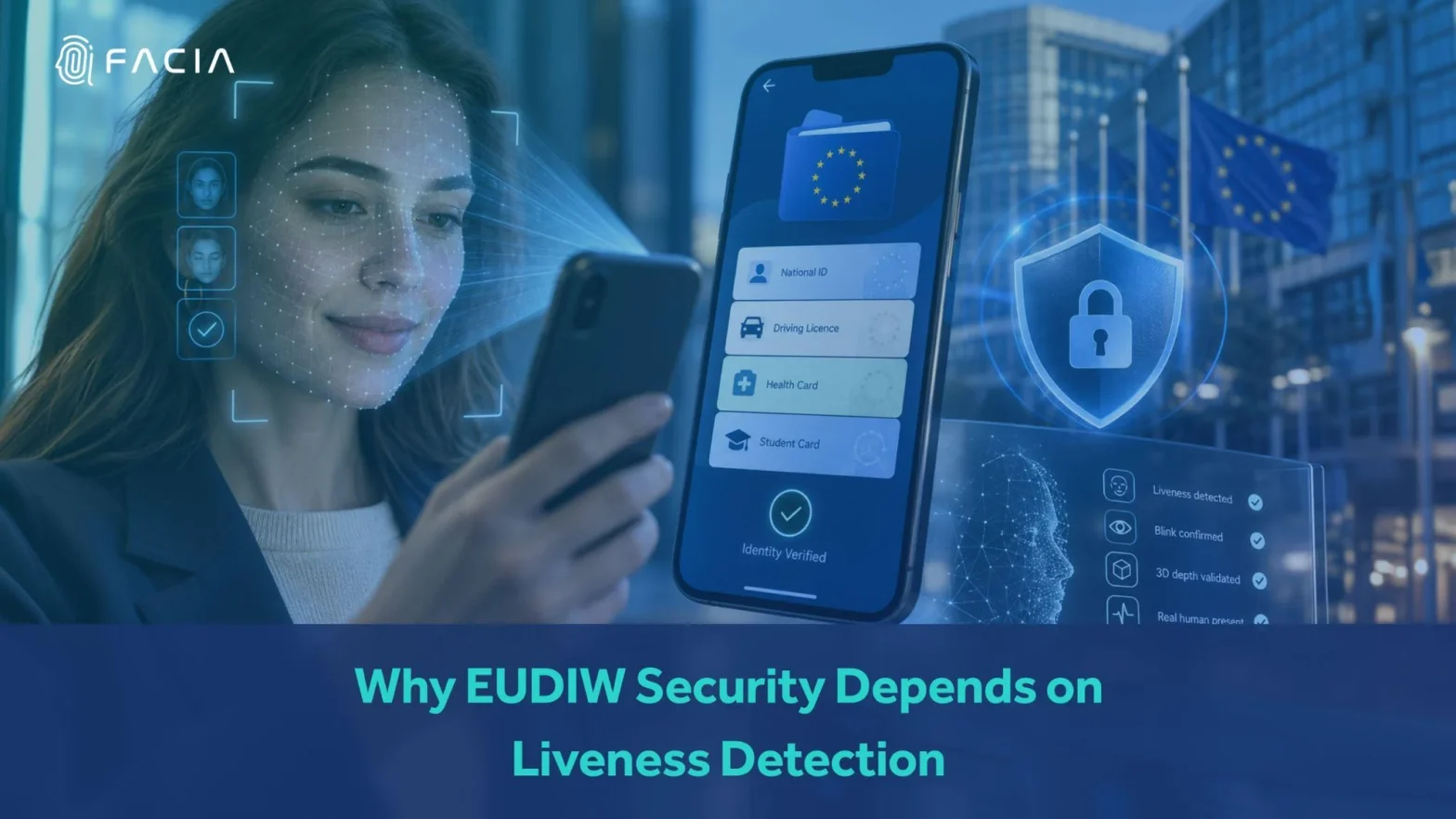
Why EUDIW Security Depends on Liveness Detection
Author: admin | 26 Jun 2025In This Post
The way people prove their identity is changing. As more services move online, people need secure, convenient ways to access banking, healthcare, government services, and other digital platforms without relying on physical documents.
The European Digital Identity Wallet (EUDIW), introduced through the updated eIDAS 2.0 framework, represents a major shift toward secure and user-controlled digital identity across Europe. Under the regulation, EU Member States must make European Digital Identity Wallets available to citizens, residents, and businesses by the end of 2026, enabling users to securely store and share verified digital credentials across services.
However, as digital identity adoption grows, protecting these credentials becomes increasingly important. A valid digital credential alone cannot confirm that the person using it is the legitimate identity owner. Fraudsters may attempt to misuse stolen credentials, impersonate users, or exploit weaknesses in identity verification processes.
This is where liveness detection becomes essential. By confirming that a real person is present during identity verification, liveness technology adds an additional layer of protection to EUDIW security, helping ensure digital identities remain connected to their rightful owners.
What Is the European Digital Identity Wallet (EUDIW)?
The European Digital Identity Wallet is a digital identity solution that enables European citizens, residents and companies to safely store, manage and share verified digital credentials.
Unlike existing identity systems, where people must repeatedly present physical documents or personal information, EUDIW gives citizens the freedom to control their identity information through a secure digital wallet.
The wallet will allow citizens to access public and private services, store digital documents and share verified identity data, all with increased control over their personal information, says the European Commission.
A Unified Identity Layer for Digital Services
EUDIW is intended to enable digital interactions in various fields such as banking, healthcare, government services, education and travel.
The aim is to establish a secure, digital identity ecosystem where people can provide proof of identity without having to reveal unnecessary personal information repeatedly.
For businesses, this opens up the door to streamline onboarding, enhance authentication, and provide more secure digital experiences.
Why Digital Credentials Need Additional Protection
While digital credentials make life easier, they need robust security behind them.
A verified credential only confirms that some identity information is valid, but it can’t always establish that the person presenting it is the rightful holder.
Attackers can try to gain access by stealing credentials, misusing identities, or manipulating verification attempts.
As digital identity proliferates, additional security layers are needed to determine not only what information is presented but also who is behind it.
This is especially important as biometric verification and liveness detection are increasingly being integrated into secure digital identity systems.
Why EU Digital Identity Wallets Need Liveness Detection
Liveness detection is an important feature in digital identity systems that helps verify the identity of the individual using the wallet.
Face recognition finds a face that matches an identity record, while liveness detection determines whether the person behind that record is physically present during the interaction. This separation will be crucial as identity fraud methods continue to change.
Preventing Identity Impersonation
One of the biggest challenges in digital identity systems is ensuring that those not authorised to use them cannot act as another person.
The stolen identity and/or compromised credentials may be used to gain access to services.
In addition to this, liveness detection provides another layer of verification that the person performing the authentication is the actual person being authenticated and not someone trying to impersonate them.
For EUDIW, this further enhances the trust during wallet enrollment and authentication.
Protecting Against Biometric Spoofing Attempts
As biometric verification becomes widespread, attackers have become more sophisticated in evading identity systems. Attempts can take the form of photos, recorded videos, screen replays, or tampered biometric inputs.
Liveness detection can determine if biometric data is from a real person or an artificial representation. Liveness technology helps to prevent biometric spoofing and misuse of digital identities by verifying real human presence.
Ensuring Real Human Presence During Verification
Facial recognition and liveness detection solve two different parts of the identity verification challenge. Face recognition answers:
“Is this face a match for the face being identified?”
Liveness detection answers:
Is this a real person who is doing this right now?
Together, these provide more robust identity assurance by linking digital credentials to the credential’s user.
For EUDIW, this is the key to the trustworthiness of digital identity transactions.
How Liveness Detection Secures EUDIW Authentication
Secure Wallet Enrollment
Creating a digital identity wallet starts with confirming that the person registering is who they claim to be. Biometric verification can confirm that the person enrolling a wallet is the same person submitting the identity data during wallet enrollment.
Liveness detection adds an extra layer of security by ensuring someone is present for the enrollment process and that it is not being performed using a fake image, recorded video, or manipulated biometric input.
Safer Authentication During Wallet Usage
Digital Identity Wallets will be used repeatedly to access various services.
When someone attempts to access the wallet, they need to be confident that it’s the right person. To ensure secure authentication, liveness detection can verify that the person seeking access is present in person.
This safeguards users against identity misuse and facilitates seamless digital interactions across various platforms.
Supporting Higher Assurance Identity Verification
Digital services have varying identity confidence requirements.
Applications such as financial services, health care, and government apps handle sensitive personal data and require stronger verification.
Liveness detection can enhance identity-verification assurance by adding proof of real human presence alongside identity matching.
eIDAS 2.0 and the Future of Secure Digital Identity in Europe
The updated eIDAS 2.0 regulation represents a major step toward creating a unified European digital identity framework.
The regulation establishes requirements for European Digital Identity Wallets, including security standards, interoperability requirements, and trusted authentication processes.
High-Level of Assurance Requirements
Digital identity systems must provide appropriate levels of confidence depending on the service being accessed.
Higher assurance levels require stronger identity proofing and authentication methods to reduce impersonation risks.
Biometric verification and liveness detection can support these requirements by helping organisations confirm that the person accessing a digital identity is genuine.
GDPR and Privacy Considerations for Biometric Identity
Biometric technology can strengthen identity security, but it also requires careful handling because biometric information is highly sensitive personal data.
The General Data Protection Regulation (GDPR) classifies biometric data used for identification as a special category of personal data that requires additional protection.
Protecting Sensitive Biometric Data
Organisations using biometric verification must apply strong privacy and security practices, including secure processing, controlled access, and responsible data handling.
Protecting biometric information is essential for maintaining user trust.
Building Privacy-First Identity Systems
The future of digital identity depends on balancing security with privacy.
Identity solutions must help prevent fraud while ensuring individuals maintain control over their personal information.
A privacy-focused approach allows organisations to create secure digital identity experiences without compromising user protection.
Why Liveness Detection Will Shape the Future of Digital Identity
As digital credentials become more widely adopted, identity verification must continue evolving alongside emerging threats.
Traditional identity checks focused mainly on verifying information. Modern digital identity systems must also confirm authenticity by ensuring the person interacting with a service is genuine.
Liveness detection provides this additional layer of trust by connecting digital identities with real individuals.
For Europe’s digital identity ecosystem to succeed, security, privacy, and user experience must work together.
How Facia Supports Secure Digital Identity Verification
As organisations prepare for a more connected digital identity future, they need verification solutions that can protect users while maintaining seamless experiences.
Facia helps businesses strengthen digital identity verification by combining advanced facial analysis with real-time liveness technology.
Its Face Verification technology helps confirm whether a user’s facial identity matches the person being verified, while Liveness Detection verifies that the interaction comes from a genuine individual rather than a spoofed image, recorded video, or manipulated biometric input.
With anti-spoofing protection, Facia helps organisations reduce impersonation risks, protect digital identity journeys, and create trusted authentication experiences.
As European Digital Identity Wallets become a key part of digital interactions, organisations need identity verification solutions that establish confidence at every verification point.
Secure digital identities. Verify genuine users. Build trusted identity experiences with Facia.