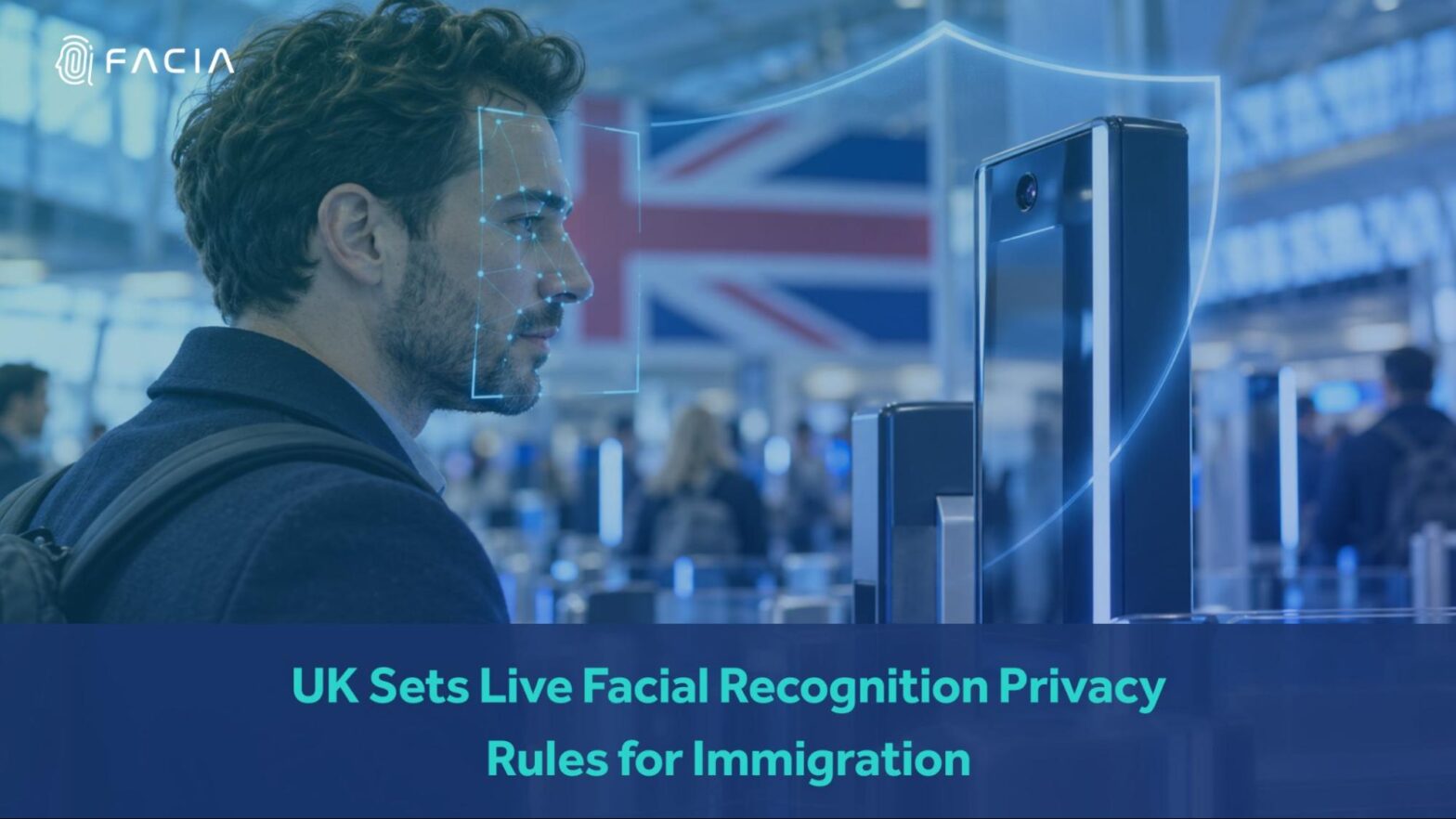
UK Sets Live Facial Recognition Privacy Rules for Immigration
Author: admin | 26 Oct 2026
In This Post
The UK Home Office has published a Data Protection Impact Assessment (DPIA) outlining new privacy safeguards for live facial recognition technology used in immigration enforcement. Released on October 22, 2026, the assessment addresses biometric data processing, identity verification, and human oversight requirements.
The technology compares facial images captured through live cameras against predefined watchlists to identify individuals sought by immigration authorities. It is deployed only when less intrusive identification methods are insufficient.
The UK Home Office’s official assessment, a 62-page document, evaluates privacy risks and outlines measures to reduce potential violations of UK GDPR requirements. These include preventing misidentification, demographic bias, unauthorised access, and excessive retention of biometric data.
A key requirement mandates the immediate, automatic deletion of biometric information for individuals who do not generate a watchlist alert. The assessment also requires deployments to meet necessity and proportionality standards.
Human oversight remains central to the framework. Officers must review facial recognition alerts and conduct secondary identity verification before initiating engagement or enforcement action.
The Home Office also requires appropriate authorisation, public engagement measures, and technical safeguards to ensure responsible deployment.
The development reflects growing regulatory attention toward facial recognition in public spaces, particularly where biometric surveillance intersects with individual privacy rights.
As governments increasingly adopt facial recognition for law enforcement and border security, the assessment highlights the importance of accurate biometric matching, transparent data processing, and human accountability in preventing wrongful identification and protecting personal information.
Similar Facial Recognition Restrictions and Legal Challenges Globally
In 2024, the European Union adopted the AI Act, restricting law enforcement’s use of real-time facial recognition in public spaces, with limited exceptions. In 2022, an Argentine court suspended Buenos Aires’ facial recognition system over biometric privacy violations. In 2023, the US FTC announced a five-year facial surveillance ban against Rite Aid.