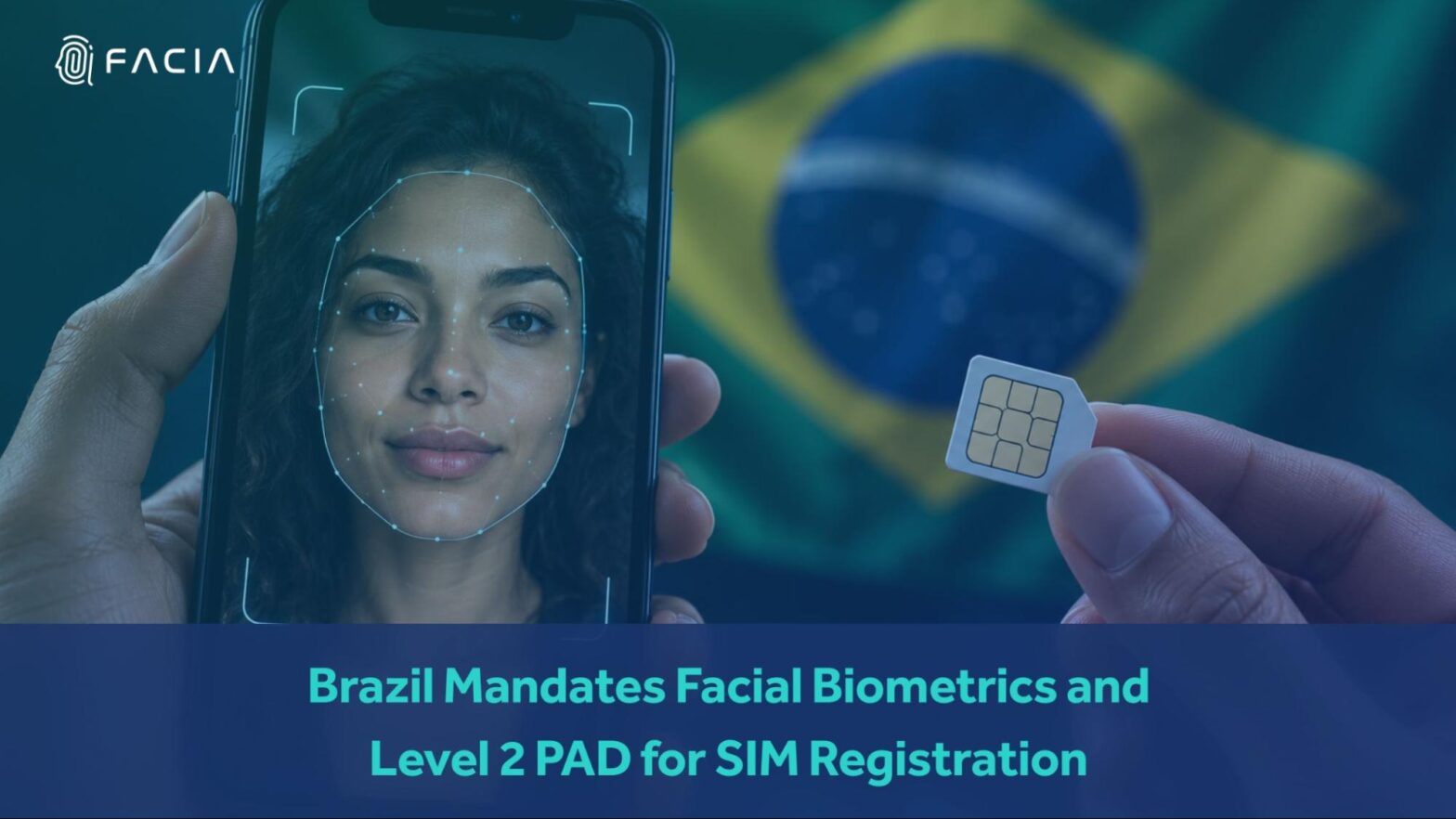
Brazil Mandates Facial Biometrics and Level 2 PAD for SIM Registration
Author: admin | 02 Nov 2026
Brazil’s telecommunications regulator, Anatel, has introduced mandatory facial biometric verification for mobile SIM registration, strengthening identity authentication requirements across the country’s telecommunications sector. The new regulations will be implemented gradually from 2027, affecting more than 280 million active mobile subscriptions.
Under Technical Standard GT-SEG.2026.11, mobile network operators must verify subscribers’ identities using facial biometrics supported by Level 2 or higher Presentation Attack Detection (PAD). The requirements reference ISO/IEC 30107-3 testing standards to strengthen protection against biometric spoofing and impersonation attempts.
The directive requires telecommunications providers to authenticate subscribers against government biometric databases or private authentication systems.
Verification processes must incorporate document authenticity checks, fraud detection mechanisms and safeguards against digital manipulation. These measures aim to identify fraudulent attempts involving photographs, prerecorded videos, masks, deepfakes and synthetic identities. Operators may also introduce additional biometric authentication methods and behavioural analysis to improve identity verification accuracy.
The regulation emphasises auditable verification procedures and compliance with Brazil’s General Data Protection Law (LGPD). According to the implementation timeline, biometric verification for new prepaid SIM activations must be introduced by September 2027. Postpaid registrations and account modifications will follow by December 2027.
Unverified subscribers will receive suspension notifications beginning November 2028. Account suspensions will commence in January 2029, with permanent deactivation possible after May 2029.
Brazil’s decision reflects growing regulatory attention toward biometric identity verification as telecommunications networks face increasingly sophisticated impersonation and identity fraud threats. The requirements also highlight the importance of robust liveness detection in protecting digital onboarding systems against emerging biometric attacks.
Global Developments in Biometric SIM Registration
Indonesia has expanded biometric SIM registration initiatives to combat identity fraud. Ghana announced plans to introduce liveness detection through a self-service SIM verification application in 2026. Meanwhile, Mexico has pursued biometric identity-linked mobile registration, and Saudi Arabia has strengthened biometric authentication initiatives to improve subscriber verification and telecommunications security.