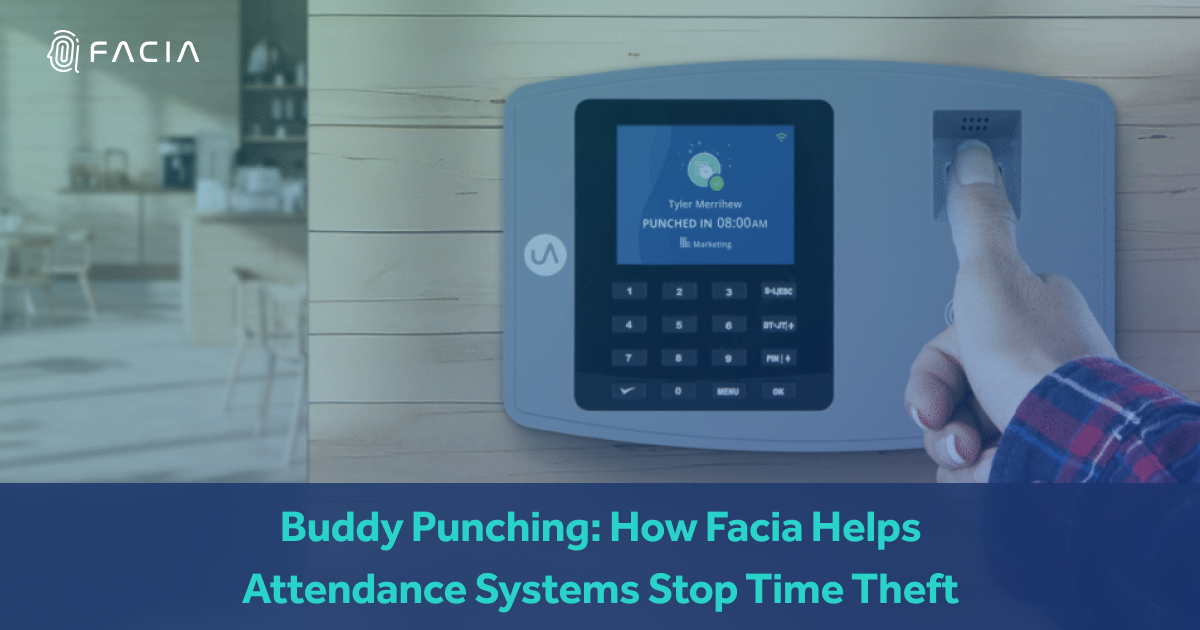
Buddy Punching: How Facia Helps Attendance Systems Stop Time Theft
Author: Carter H | 27 Aug 2026In This Post
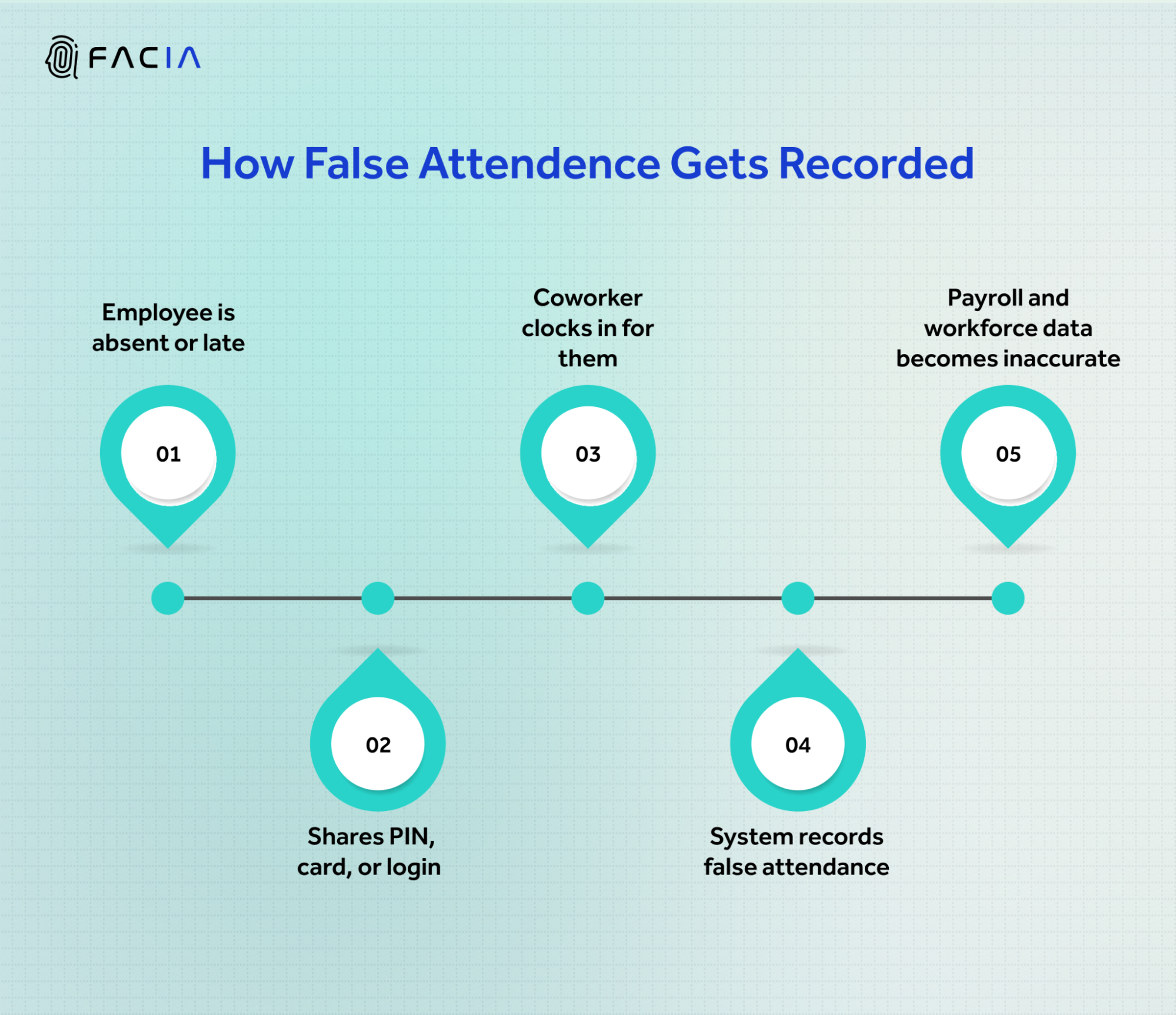
An employee is running late for work. Instead of accepting a late arrival, they message a coworker: “Can you clock me in? I’ll be there soon.”
The coworker enters a PIN or swipes their colleague’s badge. The system records both employees as present, even though only one is actually there.
This practice, known as buddy punching, can distort payroll and attendance records. According to OnTheClock’s 2026 employee time theft survey, 25% of 831 U.S. hourly workers surveyed said they had clocked in or out for a coworker, or had someone do it for them, during the previous 12 months. The same survey found that 43% had adjusted reported hours so they did not accurately reflect time worked.
Buddy punching exposes a weakness in many traditional attendance methods: they can confirm that a credential was used without confirming who actually used it. A biometric attendance system helps close that gap by linking attendance more directly to an employee’s identity.
What Is Buddy Punching?
Buddy punching occurs when one employee clocks in or out for another. It can involve sharing a PIN or password, lending an ID card, signing another person’s name on a manual sheet, or using someone else’s login credentials.
Frequent clock-ins will result in incorrect payroll, poor attendance records, scheduling problems and decreased worker accountability.
It’s easier to appreciate why the old-fashioned approach to attendance could be ripe for buddy punching when you understand how it occurs.
Why Traditional Attendance Methods Can Enable Time Theft
Traditional attendance methods are not necessarily proof of identity or knowledge.
A PIN is evidence of the knowledge of a number. A password indicates that someone has a login. A swipe card is a card that has a badge attached to it. A “no” answer to any of these does not necessarily mean that the employee assigned to the credential is physically present.
Cards can be handed to coworkers. PINs and passwords can be shared. Manual records can be changed.
The problem is that it’s not the same as credential validation and identity verification. Checking an employee’s ID at clock-in gives greater confidence than a transferable credential.
How a Biometric Attendance System Changes Verification
A biometric attendance system is a type of system that uses a physical attribute like a fingerprint or face to assist in verifying a person before attendance is recorded.
A facial biometric workflow involves a camera taking facial information and matching it to the enrolled identity. In case the verification is successful, the result can be utilised in the clock-in process.
Traditional systems often ask:
“Does this person have the correct credential?”
Biometric systems can instead help answer:
“Is this actually the registered employee?”
That creates a stronger connection between the person present and the attendance record attributed to them.
How Facia Helps Prevent Buddy Punching
Facia can add facial identity verification to attendance workflows, allowing businesses to verify the individual attempting to clock in rather than relying solely on a card, PIN, or password.
Its attendance solution combines facial recognition with liveness detection, real-time reporting, and integration support.
Facial Recognition Attendance System
A facial recognition attendance system uses facial biometrics to verify the person attempting to record attendance.
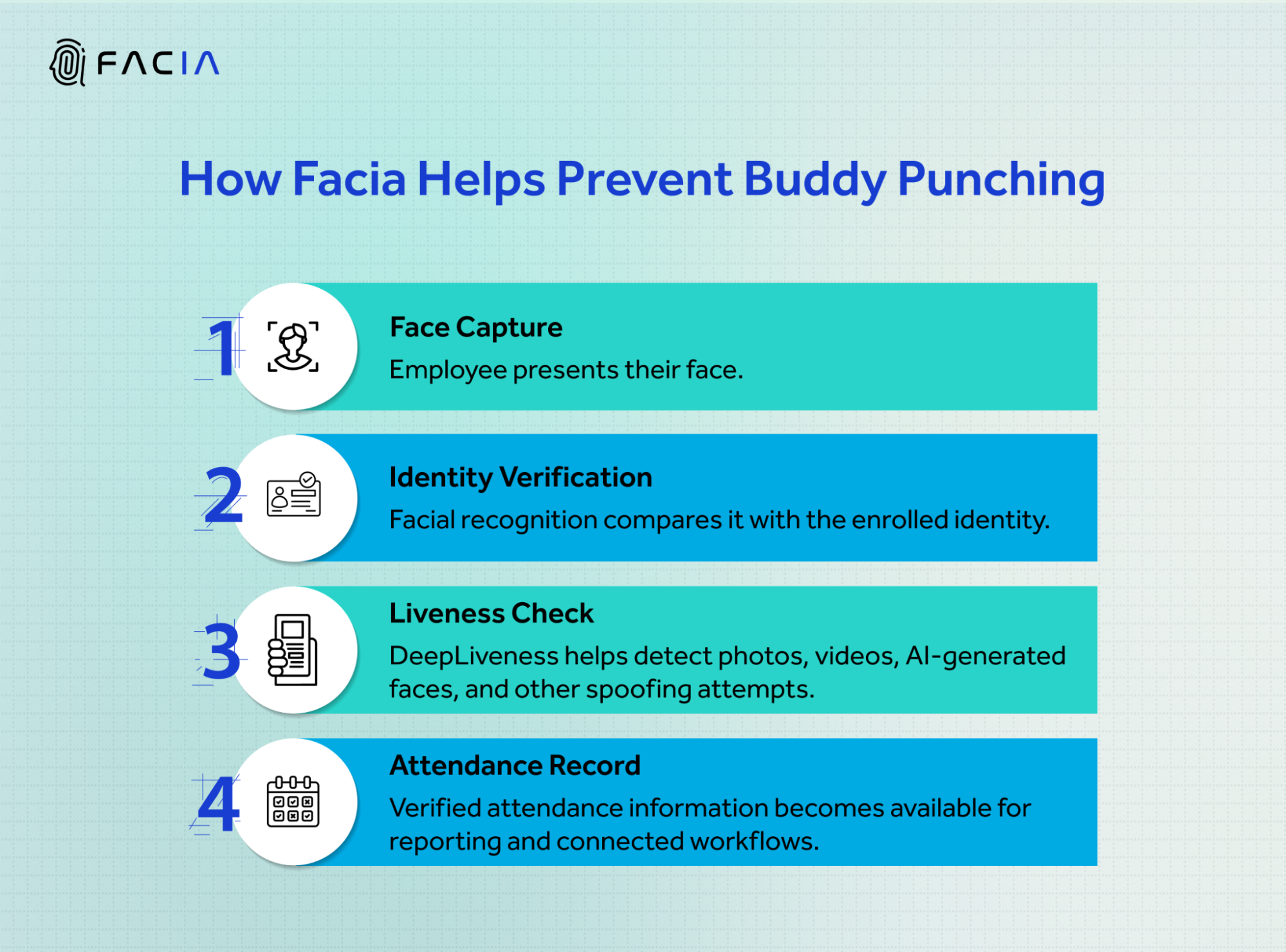
The employee presents their face to an authorised camera or interface. Facial information is captured and compared with the enrolled identity. When verification succeeds, the result can be used to record attendance.
For buddy-punching prevention, the benefit is straightforward: a worker can hand a coworker a badge or share a PIN, but facial identity is not transferable in the same way.
Liveness Detection
Facial matching raises another question: what prevents someone from presenting a photograph, video, or other spoofing material instead of the real employee?
Liveness detection adds an anti-spoofing layer designed to help determine whether biometric input comes from a genuine, present person.
Facial recognition asks, “Does this face match the enrolled employee?” Liveness detection adds, “Is a genuine person actually present?”
Facia’s DeepLiveness technology is designed to address threats including printed photos, replay attempts, AI-generated faces, and digital injection attacks.
Together, facial matching and liveness detection can make proxy attendance more difficult than systems that rely solely on transferable credentials.
Real-Time Attendance Visibility
Facia lists real-time reporting as part of its attendance solution, allowing authorised administrators to access attendance information as it is recorded.
More current data can help HR teams and managers identify late arrivals, missing attendance events, or other discrepancies sooner, including across multiple offices or locations.
Together, these capabilities create a verification workflow that connects the person at the point of clock-in with the attendance event being recorded.
Integration With Existing Attendance Workflows
Many businesses already use HR, payroll, scheduling, or workforce-management systems and may not want to replace their entire technology stack.
Facia describes its facial recognition technology as supporting integration with attendance-management systems and cross-platform workflows. This allows facial verification to serve as an additional identity-verification component within a broader attendance process, depending on supported integrations.
More Reliable Attendance and Workforce Records
Preventing buddy punching is the most direct benefit, but more dependable records can support wider workforce operations.
When attendance events are linked more closely to verified identities, organisations can have greater confidence in information used for payroll, overtime calculations, shift planning, staffing analysis, and attendance investigations.
Stronger identity checks may also reduce manual investigation of questionable punches and help managers identify discrepancies sooner.
Biometric verification does not eliminate every form of time theft. Facial verification is most directly relevant to identity-based fraud such as buddy punching and proxy attendance. Other workforce issues still require clear policies, supervision, and management oversight.
Biometrics vs. Traditional Clock-In Methods
The main difference between biometric and traditional attendance methods is what the system verifies.
Manual sheets can be altered by another person. PINs and passwords can be shared. Swipe cards can be handed to someone else. Facial biometric verification instead ties an attendance event more closely to the employee’s identity. When liveness detection is included, it can also add protection against common spoofing attempts.
Biometrics do not replace workplace policies or management controls; they strengthen identity verification during clock-in.
Responsible Use of Biometric Attendance Technology
Biometric information requires careful governance. Before deploying facial verification for attendance, organisations should review the privacy, employment, and biometric-data requirements that apply in each jurisdiction where the technology will be used.
A responsible deployment should consider lawful data collection, employee communication, retention and deletion policies, access controls, encryption, and procedures for failed or incorrect matches. Organisations should also determine how exceptions will be handled.
Employees should understand why biometric verification is used, what is processed, and how long information is retained.
Requirements vary by jurisdiction, so businesses should review their legal obligations before implementation. Strong attendance security works best when identity verification is supported by responsible data governance and clear workplace policies.
Stop Buddy Punching at the Point of Clock-In
Buddy punching succeeds when an attendance process trusts a transferable credential without sufficiently verifying the person using it.
Facial verification changes that model by connecting a clock-in more directly to the employee’s identity. Liveness detection can add another layer of assurance by helping determine whether a genuine person is present rather than a photo, video, or other spoofing attempt.
Facia combines facial recognition, liveness detection, real-time reporting, and integration capabilities to help businesses strengthen identity verification within attendance workflows.
Request a Facia demo to explore how facial verification could fit into your existing attendance process, reduce buddy punching, and support more reliable workforce records.