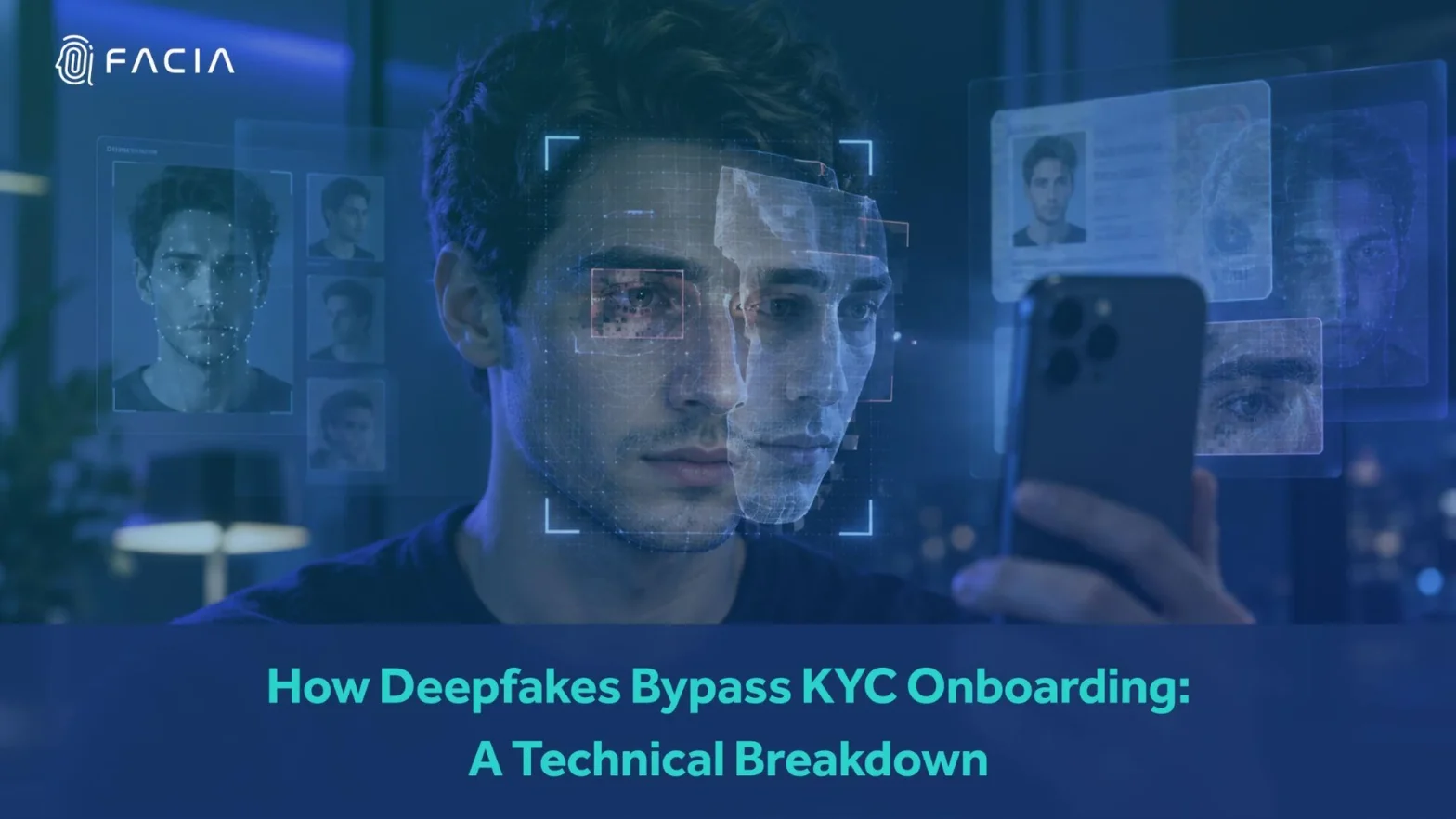
How Deepfakes Bypass KYC Onboarding: A Technical Breakdown
Author: admin | 27 Mar 2026In This Post
Digital onboarding has transformed how businesses verify customers. From opening bank accounts and accessing fintech platforms to signing up for online services, users can now complete identity verification within minutes without visiting a physical location.
However, as digital identity verification becomes faster and more convenient, fraudsters are finding new ways to exploit these systems. The rise of generative AI has introduced one of the most advanced threats yet: deepfake-powered identity fraud.
Deepfakes use artificial intelligence to create highly realistic synthetic images, videos, and audio that imitate real people. In KYC onboarding, these technologies are increasingly being used to bypass biometric checks, impersonate legitimate users, and create fraudulent identities.
The challenge is growing rapidly. The World Economic Forum has highlighted how realistic AI-generated content is creating new challenges for digital trust, making it increasingly difficult to distinguish authentic content from manipulated information.
Traditional verification methods that rely only on documents or basic selfie checks are no longer enough. Businesses must now answer a critical question:
Is the person behind the verification process actually real?
What KYC Onboarding Actually Verifies
Know Your Customer (KYC) onboarding is designed to confirm that a person is who they claim to be. Modern KYC workflows combine multiple verification layers, including identity document verification, facial recognition, selfie verification, liveness detection, and database checks.
These processes help businesses reduce fraud, meet regulatory requirements, and create safer digital experiences.
However, traditional KYC systems were mainly designed to detect physical identity fraud, such as forged documents or stolen credentials. Deepfake technology introduces a different challenge by targeting the human verification layer itself.
Instead of creating a fake document, attackers can manipulate the biometric verification process. They may use a synthetic identity, replace their face with another person’s, or inject manipulated video into a verification flow.
The challenge is no longer only verifying information. It is proving authenticity.
The Three Ways Deepfakes Bypass KYC Systems
1. Synthetic Identity Creation
Synthetic identity fraud combines real and fabricated information to create an identity that doesn’t belong to a real person.
Fraudsters may combine stolen personal details with AI-generated profile images, fake documents, and fabricated information to create convincing identities.
Generative AI has made this process significantly more advanced. Criminals can now create realistic human faces that do not belong to any real individual, making traditional identity matching systems less effective.
A facial recognition system may confirm that a face matches submitted information, but without additional verification layers, it may not determine whether that face represents a real person or an AI-generated identity.
This allows fraudsters to open accounts, access financial services, and conduct fraudulent activities while appearing legitimate.
2. Face Swap and Virtual Camera Injection Attacks
Face swap attacks are among the most common forms of deepfake-based identity fraud.
During a face swap attack, criminals replace their own face with another person’s face during a live verification session. Advanced AI models can replicate facial expressions, eye movements, head movements, and other visual characteristics, making manipulated identities appear increasingly realistic.
Another growing threat is virtual camera injection.
Instead of providing a genuine camera feed, attackers use manipulated video streams that display pre-recorded footage or AI-generated content. If a verification system only checks whether a face appears on screen, it may fail to identify that the input has been digitally altered.
The International Telecommunication Union (ITU) has warned that AI-generated deepfakes are becoming increasingly difficult to detect and are creating new risks across areas such as financial fraud, identity misuse, and digital trust.
3. API-Level Injection Attacks
While many organisations focus on the user-facing verification experience, attackers often target the technology behind the process.
Injection attacks attempt to manipulate the information entering an identity verification system. Instead of attacking biometric analysis directly, criminals replace or alter the original input.
Examples include injecting pre-recorded videos, bypassing camera capture, manipulating biometric data streams, or exploiting weak verification architecture.
This makes protecting the entire verification pipeline essential. A secure KYC solution must not only analyse the face but also ensure that the captured information comes from a genuine source.
Why Traditional Liveness Detection Alone May Fail Against Advanced Deepfakes
Liveness detection has become a critical component of modern identity verification. It helps determine whether a real person is physically present during verification rather than a static image or recorded video.
However, basic liveness methods may struggle against advanced AI-generated attacks.
Older approaches often rely on simple challenges such as blinking, moving the head, or following instructions. While these methods can prevent basic spoofing attempts, sophisticated deepfake systems can increasingly replicate human movements and responses.
Modern identity verification requires a multi-layered approach that combines:
- Advanced liveness detection
- Deepfake detection
- Biometric analysis
- Injection attack protection
The goal is not simply to detect a face.
The goal is to verify that a genuine person is controlling that face in real time.
What a Modern Deepfake-Resistant KYC Stack Requires
As AI-powered fraud evolves, businesses need identity verification systems designed to handle increasingly complex attacks.
A strong deepfake-resistant KYC approach combines multiple security layers.
Presentation Attack Detection (PAD) helps identify attempts where attackers present fake biometric information, including images, screens, masks, or other artificial representations.
Injection Attack Protection secures the verification process by detecting manipulated inputs, virtual cameras, and altered video streams before they reach the verification system.
Deepfake Detection analyses digital patterns and biometric signals to identify AI-generated or manipulated content. Advanced models evaluate facial inconsistencies, unnatural movements, visual artefacts, and synthetic generation patterns.
Together, these technologies create a stronger verification framework focused on proving whether the person behind the screen is genuine.
FATF and Global Regulatory Focus on AI Identity Fraud
Regulators worldwide are strengthening digital identity frameworks as AI-powered fraud increases. The Financial Action Task Force (FATF) highlights the importance of reliable digital identity systems for customer identification, verification, and managing risks such as fraud and identity theft.
The EU AI Act introduces transparency requirements for AI-generated and manipulated content, including deepfakes. As AI threats evolve, businesses need stronger identity verification layers to detect deepfakes, synthetic identities, and digital impersonation.
Deepfake KYC Attack Prevention Checklist
Organisations should evaluate their identity verification processes against modern AI-driven threats. A secure KYC process should verify both the identity information provided and the authenticity of the person presenting it.
| Risk | Prevention Approach |
| AI-generated identities | Advanced biometric verification |
| Face swap attacks | Deepfake detection |
| Replay attacks | Liveness detection |
| Virtual camera manipulation | Injection attack protection |
| Identity impersonation | Multi-layer identity verification |
How Facia Helps Build Deepfake-Resistant KYC
Deepfake fraud is changing the standard for identity verification. A matching face or valid document alone cannot prove that the person behind the screen is genuine.
Facia helps businesses strengthen KYC onboarding with multiple layers of biometric and fraud protection. Face Verification confirms that the user matches the expected identity, while DeepLiveness helps establish that a real person is physically present during verification.
Facia’s Deepfake Detection identifies AI-generated or manipulated facial content before it can compromise onboarding. At the same time, Injection Attack Protection helps detect virtual cameras, altered video feeds and digitally injected media targeting the verification pipeline.
Together, these capabilities help organisations defend against face swaps, replay attacks, synthetic identities and emerging AI-powered impersonation techniques.
With Facia, identity verification moves beyond simply recognising a face. It helps businesses verify that every user is real, present and authentic.
Ready to strengthen your KYC against deepfake fraud? Book a demo with Facia and see how advanced identity verification can protect your onboarding journey.