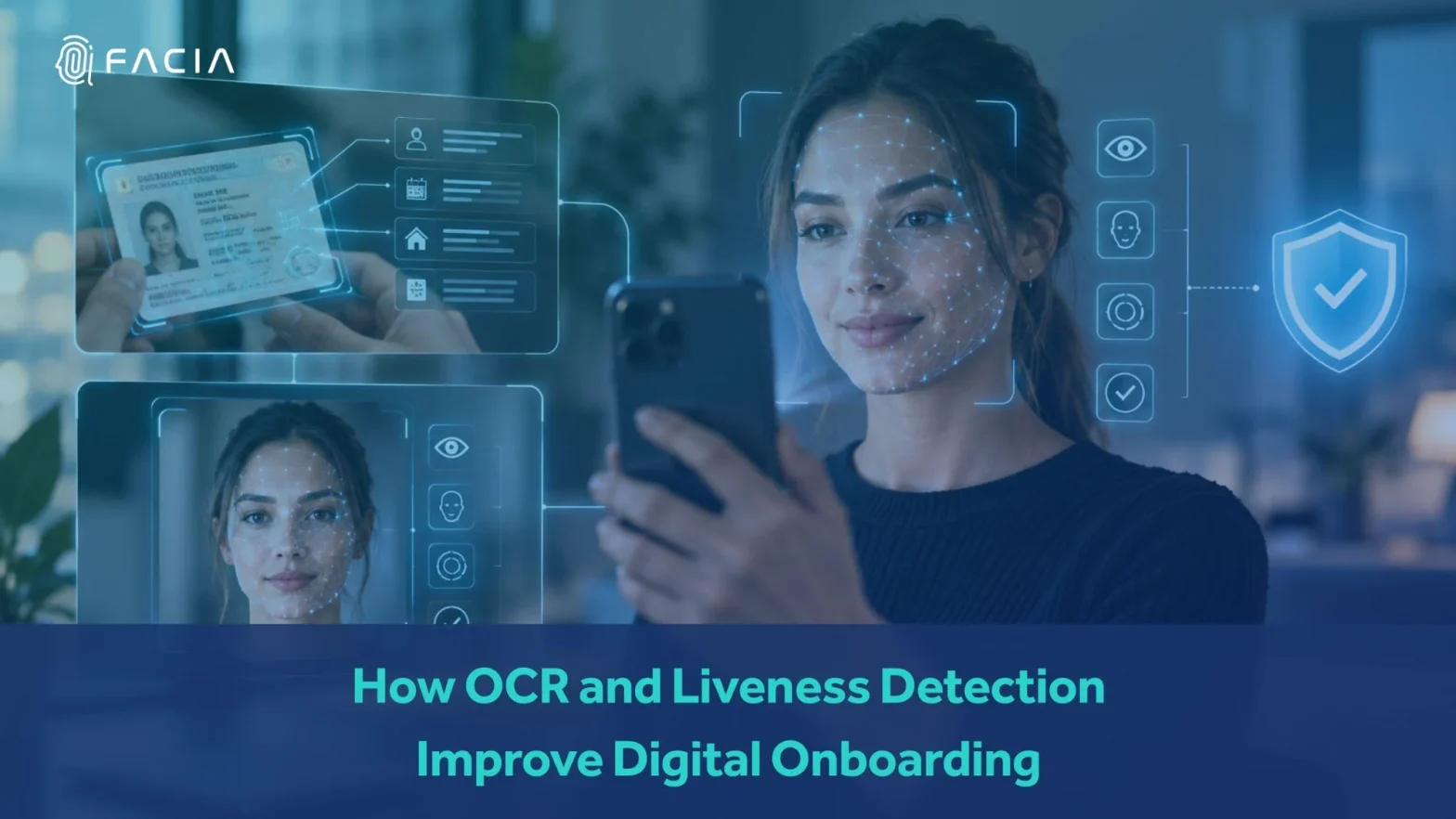
How OCR and Liveness Detection Improve Digital Onboarding
Author: admin | 19 Sep 2024In This Post
Digital onboarding has transformed how businesses verify customers. From opening financial accounts to accessing online services, customers now expect fast and convenient identity verification without physical paperwork or branch visits.
However, this shift has also introduced new challenges. Businesses must verify not only the information customers provide but also whether the person behind the interaction is genuine. Fake documents, stolen identities, and impersonation attempts continue to create risks for organisations relying on remote verification.
The demand for secure digital identity solutions is growing as businesses adopt more advanced verification methods. According to the UK Digital Identity Report 2026, biometric verification and liveness detection are among the most widely adopted capabilities in the digital identity sector, with 57% of providers offering biometrics and liveness detection services.
A reliable onboarding process requires multiple verification layers. OCR helps extract and validate information from identity documents, while liveness detection confirms that a real person is present during verification. Together, these technologies help businesses create faster, safer, and more trusted digital identity experiences.
What Is OCR Technology in Identity Verification?
Optical Character Recognition (OCR) is a technology that captures information from a physical or digital document and makes it available in structured digital form.
In identity verification, OCR can help businesses automatically extract data from official documents like passports, national identity cards, and driving licenses.
Extracting Identity Information From Documents
OCR technology can identify and extract important details from identity documents, including names, dates of birth, document numbers, nationality, and expiry dates. This reduces manual data entry and allows businesses to process customer information faster and more accurately.
OCR technology can detect and extract information from IDs, such as names, dates of birth, document numbers, nationality, and expiration dates. This minimises the risk of human error and helps businesses handle customer data faster and more efficiently.
OCR, however, only validates the information in a document. It cannot determine if the person presenting the said document is the rightful owner. Not every document is a genuine identity document. That is why enterprises need additional layers of biometric authentication.
What Is Liveness Detection in Customer Onboarding?
Liveness detection is a biometric security measure that checks whether the individual undergoing verification is alive during the process.
Facial recognition determines whether the face matches the identity being confirmed, while liveness detection determines whether the face belongs to a real person, not a fake.
This will help to prevent attempts such as:
- Static images
- Recorded videos
- Digital screen replays
- Other presentation attacks
For organisations offering digital services, liveness detection adds an important layer of trust by ensuring a genuine individual completes identity verification.
When combined with OCR, liveness detection creates a more complete verification process by connecting the document, biometric identity, and actual person behind the interaction.
How OCR and Liveness Detection Work Together
A robust digital onboarding process goes beyond a simple document check or a pattern-matching face comparison. To ensure information authenticity and human presence, OCR and liveness detection work together.
Step 1: Document Verification Begins the Identity Journey
This begins with a customer presenting an identity document. OCR technology helps recognise information on a document and convert it into structured data.
That’s because it lets businesses confirm essential information and also minimises manual document review. The information retrieved helps establish the basis for the identity verification process.
Step 2: Facial Verification Connects the Person to the Document
After the system captures document information, facial verification helps determine whether the person completing onboarding matches the identity shown on the document.
The system compares facial characteristics from a live image or video with the image available on the submitted identity document. This connection between the document and the individual helps reduce impersonation risks.
Step 3: Liveness Detection Confirms a Real User Is Present
Facial identity is compared, and liveness detection confirms that a real person is interacting. The technology can evaluate biometric signals to determine whether a human is present or detect whether a fake picture, video, or other spoofing is being used to impersonate someone.
This helps stop attackers from using stolen identity information to create fake accounts.
Step 4: Businesses Receive a More Reliable Verification Decision
With OCR and facial verification, businesses better understand the customer they are onboarding through liveness detection.
This multi-layered strategy can minimise manual verification, improve decision-making, and deliver more accurate identity verification results.
Why Businesses Need Combined OCR and Liveness Verification
Reducing Identity Fraud Risks
Identity fraud scams are evolving as criminals find new ways to exploit digital systems. Document-only verification does not necessarily prove that someone presenting an official ID is the correct owner of that ID, but it can help determine whether the ID exists.
Combining OCR with biometric verification helps businesses verify both the document and the individual behind it. This provides greater security against identity theft, impersonation and fraudulent onboarding attempts.
Creating Faster Customer Onboarding Experiences
Users are used to using digital services, and they want them to be easy and instant. The traditional verification processes, which heavily depend on manual document verification, can lead to delays, operational burden, and a bad customer experience.
OCR makes data extraction from documents an automated process, and liveness detection can help with identity verification over distance. As a collective, they are vital to ensuring a seamless and secure onboarding process for businesses.
Supporting KYC and Compliance Requirements
In regulated sectors, such as financial services, organizations must implement effective customer identification systems to fulfil compliance requirements.
The Financial Action Task Force (FATF) highlights the importance of reliable digital identity systems for customer identification and verification, emphasising the need for secure and trustworthy identity processes.
For businesses, combining document verification with biometric authentication strengthens KYC workflows and builds confidence in digital identity decisions.
Challenges With Traditional Customer Verification Methods
Traditional identity verification processes often rely on manual reviews, separate systems, and limited fraud-detection capabilities.
Slow Verification Processes
Manual document checks can be cumbersome and costly, especially when businesses must process many customer applications in a limited time.
Increased Risk of Human Error
Manual review can make it difficult to detect inconsistencies, altered information, or even fraudulent attempts.
Limited Protection Against Modern Fraud
Document verification can’t always confirm whether someone is using your identity. Modern identity verification involves multiple layers of security that confirm identity and verify human presence.
OCR, Liveness Detection, and the Future of Digital Identity Verification
With the growing digital services, enterprises should ensure secure, accurate, and convenient identity verification processes. The future of digital onboarding will rely on multiple verification technologies, not a single security layer.
OCR helps businesses recognise identity documents. Facial verification links the document holder to the document. Liveness detection ensures that a real human being is going through the process. These technologies provide a stronger foundation for trusted identity experiences.
How Facia Helps Secure Digital Onboarding
As businesses move toward digital-first customer experiences, they need identity verification solutions that protect against fraud while keeping onboarding simple.
Facia helps organisations strengthen their digital identity workflows by combining advanced biometric verification with real-time liveness technology.
Its Face Verification technology helps confirm whether a user’s facial identity matches the person being verified, while Liveness Detection ensures the interaction comes from a genuine individual rather than a spoofed image, recorded video, or manipulated input.
With anti-spoofing protection, Facia helps businesses reduce identity fraud risks, improve onboarding confidence, and create safer customer experiences.
By verifying both the identity and the person behind it, Facia enables organisations to build trusted digital identity journeys in an increasingly complex fraud landscape.
Verify genuine users. Secure digital onboarding. Build trusted identity experiences with Facia. Book a Demo today.